Rodent Removal in Wellington, FL
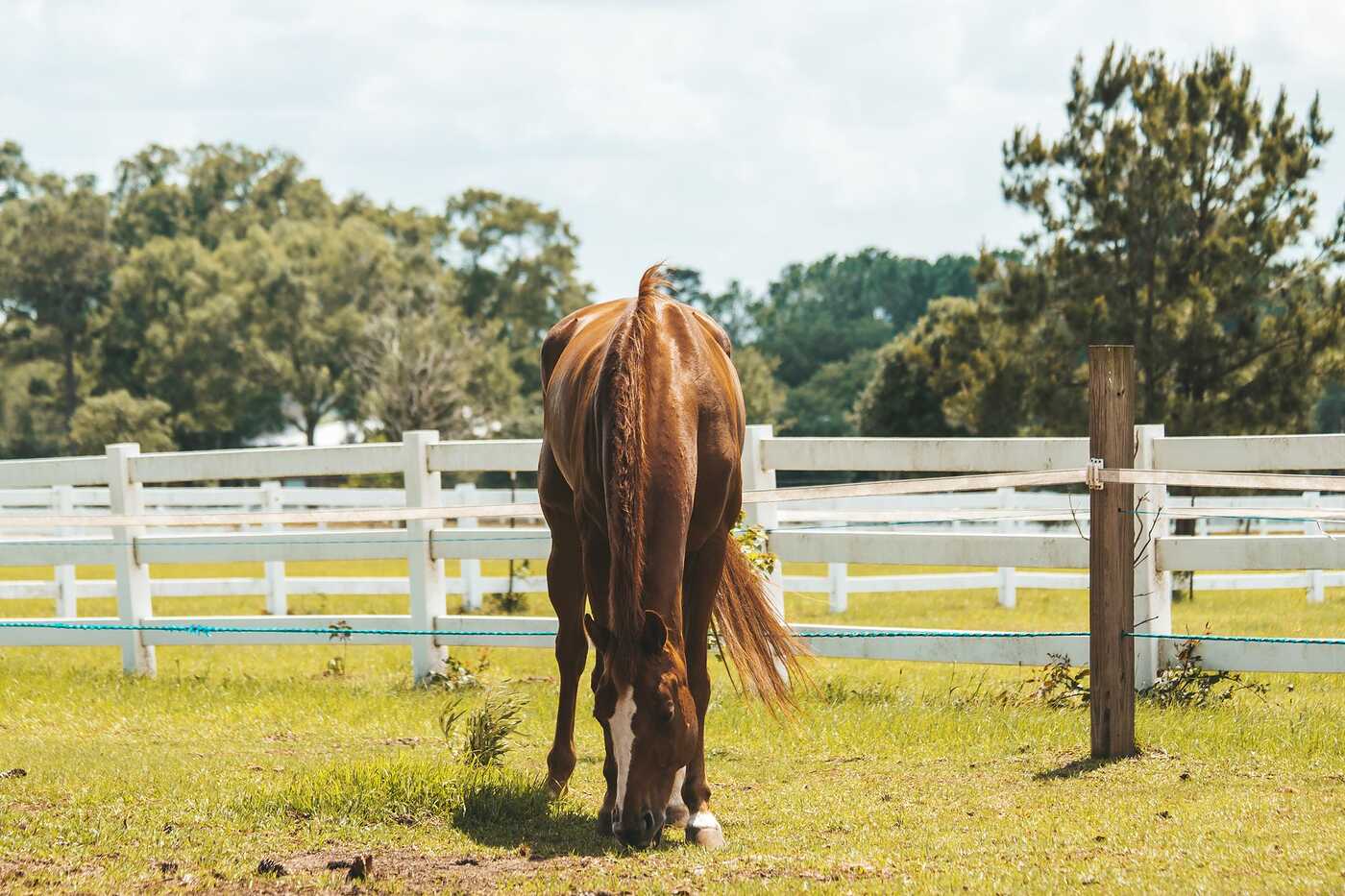
Wellington is equestrian Palm Beach County: barns, feed rooms and paddocks alongside gated golf neighborhoods. Stored grain is the reason rodent pressure here is in a category of its own.
Free Inspection in Wellington
The free inspection covers the house roofline and attic, and on an equestrian property the barn, the feed room, the tack room and the storage buildings as well, with each opening photographed and located.
Wellington is roughly thirteen miles southwest of the Clematis Street office, out past the turnpike on the western side of the county. The line is answered at every hour, and a visit can be scheduled around a barn's working day. Book it on the contact page or by calling.
Barns, feed rooms and why the pressure is different here
Wellington is built around horses, with the Winter Equestrian Festival and a patchwork of paddocks, barns and equestrian acreage, and stored feed is the single biggest rodent attractant on any of those properties.
Grain, pellets, sweet feed, supplements and bedding in a feed room provide unlimited food in a warm, sheltered building, and a barn provides harborage in hay stacks, tack rooms, walls and roof structures. Spilled grain in a stall aisle and feed left in bins without lids do the rest. Both rat species are in play: roof rats in the barn roof structure and the rafters, and Norway rats at ground level in burrows under feed room floors, along foundations and beside manure and bedding storage.
The work on an equestrian property therefore starts with storage rather than with sealing. Feed moved into rigid metal or heavy plastic containers with tight lids, bins kept closed, spillage swept daily, bedding stacked off the floor and away from walls, and manure storage kept at a distance all reduce the population far more than any device. After that come the closures: grain room doors and thresholds, gaps at the base of walls, penetrations where conduit and water lines enter, and the roof structure where rats are nesting above the stalls.
Gated neighborhoods and tile-roofed houses
Alongside the equestrian land, Wellington has extensive gated golf and country club housing from the 1980s through the 2000s, block and stucco under barrel or flat concrete tile.
On those houses the work is the familiar county pattern: the eave course under the first row of tile left open, hips and ridges with gaps, vent screening degraded, and the air conditioning line set penetration oversized. Barrel tile leaves quarter to half inch openings unless a bird stop or mortar closure is fitted, and bird stopping sits in the Department of Energy list of measures worth fitting on a tile roof. A roof rat needs an opening the size of a quarter.
Exterior work in these communities generally requires architectural review approval. Preparing the application with the inspection, naming the bird stop as a galvanized or aluminum part in a matching finish and attaching the product sheet, is what keeps the approval in weeks. Interior sealing and trapping start immediately. Where a home sits near paddocks or an equestrian facility, the pressure on it is higher than the same house would carry in a purely residential neighborhood, and the inspection will say so.
Canals, preserve edges and the agricultural west
The village sits on drained land threaded with canals, with preserve and agricultural land to the west, which shapes the ground-level half of every job.
Canal banks, irrigation ditches, outfall structures and dense planting are burrowing habitat, and landscape beds or sound walls against a building give a ground rodent a covered route to a slab penetration. On acreage the same role is played by equipment storage, pallet stacks, trailer parking and brush piles. Clearing a strip of open ground around a structure is one of the oldest rodent-control measures there is and it still works.
The climate adds no relief. There is no winter die-off, roof rats breed year-round, and local activity peaks twice: June to September when extreme heat drives animals into cooled buildings, and November to February in the mild season, which on an equestrian property is also the busiest season for horses and people. Hurricane season from June to November opens barn roofs and house rooflines and leaves debris harborage, which is covered under post-storm rodent inspection.
What We Handle in Wellington
Wellington work divides between equestrian properties and gated residential housing, and most properties get some of each.
- Rodent inspection: house roofline and attic, plus barn, feed room, tack room and storage on an equestrian property.
- Commercial rodent control: for barns, training facilities and equestrian businesses, with a device map and dated service records.
- Roof rat removal: trapping in barn roof structures and house attics, left in place long enough to catch wary animals.
- Rodent exclusion: bird stop on tile, feed room doors and thresholds, wall base gaps and service penetrations closed in steel and metal.
- Condo and HOA rodent control: the architectural review paperwork in a gated community.
- Attic cleanup: nests and soiled insulation removed after the roofline is closed.
A Typical Wellington Job
The situation: A small private barn on an equestrian lot with eight stalls, a feed room at one end, hay stacked against a side wall, and the owner's house twenty yards away under concrete tile. Grain has been disappearing from an open bin, there are droppings along the aisle, and the owner has separately heard movement in the house attic above a bedroom.
What gets done: The inspection finds Norway rat burrows under the feed room floor slab edge and behind the hay stack, gnawing at the base of the feed room door, and an open conduit penetration at the wall. In the barn roof structure there are roof rat droppings on the rafters above two stalls. At the house, the eave course is open along the rear elevation and a line set penetration is unsealed. Feed goes into lidded metal bins, the hay is moved off the wall and stacked on pallets, the aisle is swept down daily, the feed room door gets a metal kick plate and threshold, and the conduit penetration is packed and capped. Traps go in the barn roof structure, in protected positions near the burrows, and on the house attic run. The house eave closure goes into the quote with an elevation measurement.
How it turns out: Catch continues for two weeks and then stops, which is longer than a house alone because the food supply was so large. Grain loss ends once the bins are sealed. The house gives up three animals and the rear eave is closed the following week. The owner gets separate prices for the barn work, the house closures and the ongoing barn monitoring.
What This Costs in Wellington
Equestrian properties are quoted per building after a walk-through, and the published bands still frame each individual piece of work.
| Piece of work | Reference band | Source |
|---|---|---|
| Trapping and removal phase | $250 to $1,200 | HomeGuide 2026, national |
| Exclusion of a house or a building | $500 to $2,500 | HomeGuide 2026, national |
| Exclusion, Florida reference | $550 to $1,642 | Angi, Tampa figures |
| Attic or loft cleanup | $600 to $2,500 | HomeGuide 2026, national |
| Insulation removal and replacement | $2.50 to $5.50 per sq ft | HomeGuide 2026, national |
A barn is priced separately from a house because the work is different: storage changes, door and threshold hardware, wall base closures and a roof structure that is not a sealed attic. A house with a tile roof is priced on eave length. What makes an equestrian quote honest is that it includes the storage and housekeeping items rather than relying on devices to absorb an unlimited food supply. Ask for barn, house and any monitoring as three separate lines.
Book a free inspection in your town
Palm Beach County is covered end to end. Leave a name and number, or call, and the dispatcher books the nearest licensed contractor for a free roofline and attic walk.
Rodents in the attic
What is happening above the ceiling, explained.
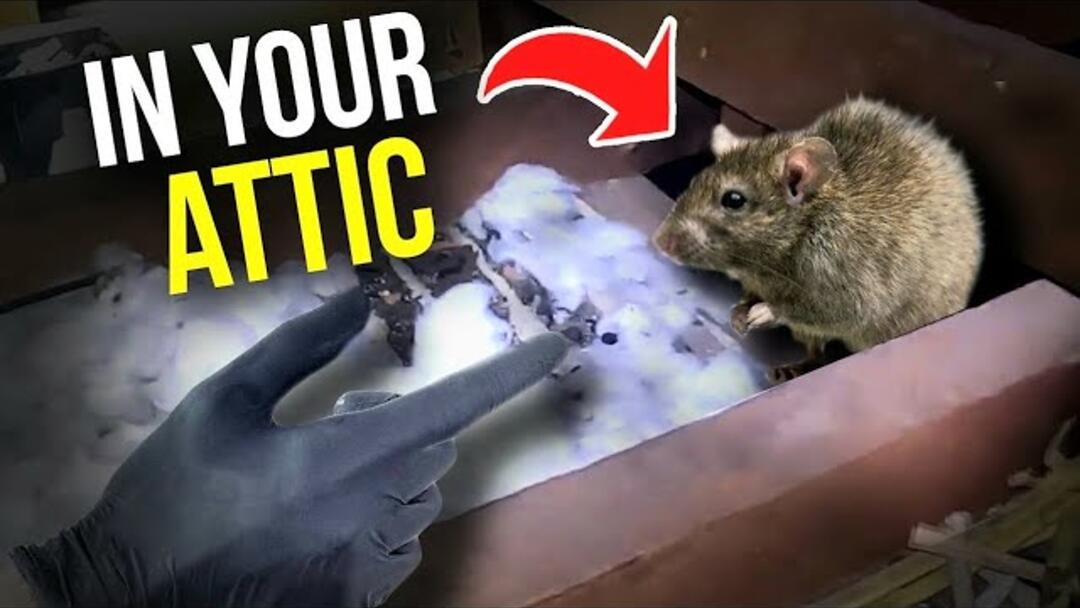
Video: Rodents in your ATTIC!? Here's what you do, from Twin Home Experts.
Common Questions in Wellington
What barn owners, managers and residents here ask first.
Barns and feed
Can a barn ever be rodent free?
A barn with stored grain will always have pressure on it, and the realistic goal is a population kept to nothing rather than a building nothing ever enters. What gets you there is feed in sealed rigid containers, spillage swept daily, hay and bedding stacked off the floor and away from walls, manure storage at a distance, open ground around the structure, plus closures at doors, thresholds, wall bases and service penetrations. Devices handle the remainder; they cannot outpace an open feed bin.
Is it safe to use rodenticide around horses?
That is a question for the licensed operator and your veterinarian, and the safer default in a feed and animal environment is mechanical control. The EPA notes that most rodenticides are anticoagulants with death typically four days to two weeks after feeding begins, and UF/IFAS makes the point that trapping reduces the risk of a poisoned animal dying inside a building. In a barn that also means fewer carcasses in a hay stack or a wall. Applying rodenticide for hire in Florida requires an FDACS-licensed business with a certified operator, so ask for the credential.
Houses
We live near the show grounds. Does that make our house worse?
It raises the background pressure, because stabling, feed and waste handling nearby support a larger population than a purely residential street would. It does not change what the house needs. A roof rat ranging about 150 yards from its den will test whichever roofline is open, so the work is closing the eave course and the vents to the quarter-inch standard and keeping branches off the roof. The inspection will tell you how much pressure the location is adding and what is open.
Does the HOA approval hold up the roof work?
It adds time rather than stopping the job, and a well-specified application keeps it short. Exterior work in a gated community needs review, so the submission names the bird stop part, its gauge and finish, and the elevations involved, with a product sheet attached. That paperwork is drafted alongside the inspection findings here. Trapping and interior sealing proceed straight away, so the animals are being dealt with while the board reads the application.
Still have a question? Call (561) 589-3578 and ask.
Nearby Areas We Serve
The contractors dispatched to Wellington cover the neighboring towns as well, and the service area runs across the whole of Palm Beach County.

Book a Free Inspection in Wellington
The inspection is free for the house, the barn or both, and the quote comes back as separate lines rather than one figure.