Rodent Inspection in West Palm Beach, FL
The inspection is where a rat job is decided: which openings are in use, which animal is inside, and what each part of the fix should cost. It is free, it produces written findings, and it commits you to nothing.
What a rodent inspection in West Palm Beach covers
A rodent inspection here is a walk of the roofline from a ladder, the attic from the hatch to the far gable, the garage and the utility penetrations at ground level, and the trees and hedges that touch the house, with every opening a quarter inch or wider measured and written down. Whoever attends is looking for two things at once: how the animals are getting in, and what they have done since they arrived.
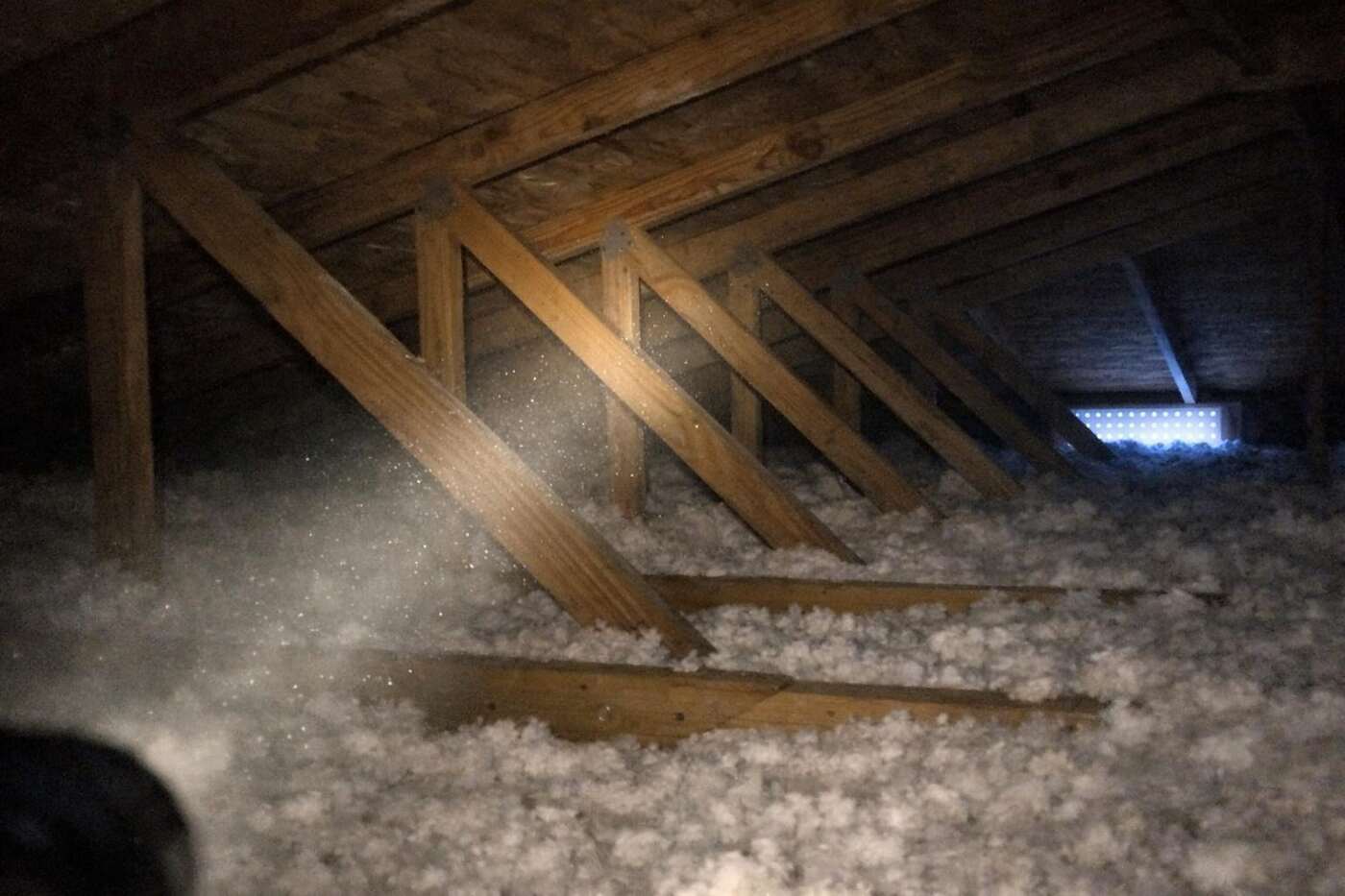
On a tile roof the walk starts at the eave course, because the gap under the first row of tile is the largest opening on most Palm Beach County houses and it runs the whole length of the edge when the bird stop is missing. From there it moves to the soffit returns, the gable and off-ridge vents, the line-set and cable entries, the garage door seal and the dryer cap. Inside, the contractor reads the attic for droppings, rub marks, flattened runs through the insulation and chewed wiring.
- Eave course of every tile edge, hips and ridges included
- Soffit returns at every corner and second-story step
- Gable, off-ridge and ridge vent screens
- AC line set, cable, electrical mast and plumbing vent penetrations
- Garage door seals and the ceiling panel gap into the attic
- Attic insulation, top plates, trusses and wiring
- Palms, mango, avocado and citrus limbs, ficus hedges and cable drops touching the roof
The findings come back as a written list, and that list is what the exclusion and trapping quotes are built on.

Signs the inspection is reading, and what each one means
The inspection turns sounds and smells into a species and a route, and it does that by reading sign the homeowner has usually already noticed without knowing what it meant. Night noise overhead points to a roof rat; daytime footfalls point to a squirrel; faint sounds in a cabinet with tiny droppings point to a mouse.
Droppings
Roof rat droppings run a quarter to half an inch long, banana shaped with pointed ends, per UF/IFAS, and they collect where the animals run and feed: along the attic top plate, on garage shelving, behind the water heater. The contractor notes size, shape, quantity and whether any are fresh and soft, which says whether the run is current.
Rub marks and runs
A greasy smear along a fascia board, a pipe or the line-set insulation marks a gap the animal squeezes through nightly. In blown-in insulation the runs show as flattened tunnels between the entry and the nest.
Gnawing
Chewed soffit edges, gnawed vent mesh, stripped insulation on an attic cable or a pool pump lead. UF/IFAS states that rats chew through wires and can potentially start fires, so any gnawed conductor goes on the report as an item for an electrician.
Fruit
Hollowed mangoes, oranges or avocados under a yard tree, eaten from the top while still hanging, are the sign that the yard population is fed and the roof is within reach.
What you get in writing after the inspection
The inspection produces a written findings list and an itemized quote, and both are yours whether or not you book any work. The findings name each opening with its location and size, the evidence found in the attic, the species the contractor believes is present, and the trees or hedges that give the animal its route to the roof.
The quote separates the job into lines: trapping and the number of return visits, sealing with a material named at each opening, and any attic cleanup or insulation work as its own decision. Anyone reading homeowner forums knows why that matters. A single bundled figure is the thing people say they could never judge, and a plan that folds a monthly contract into the removal price is a recognized warning sign. The lines here can be read against the published bands on every service page.
Where an association is involved, the findings also name which openings sit on the unit side and which belong to the building envelope, so the manager has a document to act on. Where a sale is involved, the same walk becomes the basis for a clearance letter once any sealing is done.
Why a free inspection is worth more than it sounds
People in the Reddit threads on rodent work describe paying around $75 just to get a bid, and HomeGuide prices a standalone inspection at $0 to $175 nationally, so a free walk removes the cost of finding out whether you have a problem and what a fair fix looks like. It also removes the pressure to accept the first quote, because the findings list travels with you to any second bid.
The free inspection is the product on this line. A dispatcher answers the phone at any hour, works out what has happened at the property from what you describe, and lines up the nearest licensed contractor for the walk. Nothing is sold over the phone, and nothing is quoted from a photograph. The visit is what sets the sequence, and the sequence is what decides whether a rat job ends in two weeks or drags on for four months.
For a homeowner who has been awake for two weeks of nights listening to the ceiling and has been told by friends to stop worrying, the findings list is also the first piece of paper that says the noise is real and has a cause.
How long does a rodent inspection take?
A single-story house takes about an hour, and a two-story tile roof with a large attic can take closer to two, most of it on the ladder. The contractor walks every eave rather than the one where the noise was heard, because the run a roof rat uses to get in is often on the opposite side of the house from the room it nests above.
A condo unit is quicker inside and slower on the paperwork, since the walk covers the unit, the accessible ceiling plenum and the chases, then notes the exterior items for the manager. A historic house in Flamingo Park or Old Northwood takes longer at the soffits, where old boards have shrunk apart and every joint is a candidate.
The written findings usually follow the same day, and the quote with them. If the attic is active, the traps can go in on the inspection visit so that no time is lost while the sealing is scheduled.
Is it rats, or could it be something else?
Most night noise in a West Palm Beach ceiling is a roof rat, and the inspection confirms it from the droppings and the runs rather than the sound. The species question matters because it decides where the traps go and what the sealing looks like.
| What you hear or find | Most likely animal | What the inspection checks |
|---|---|---|
| Running and scratching overhead after dark, droppings a quarter to half an inch with pointed ends | Roof rat | Eave course, soffit returns, vents, trees touching the roof |
| Heavy movement at ground level, burrows by a seawall, slab or dumpster pad | Norway rat | Foundation edge, garage seal, crawl-under spaces on older waterfront lots |
| Faint sounds in cabinets, droppings smaller than a grain of rice | House mouse | Kitchen and utility penetrations, appliance voids |
| Footfalls at first light and dusk, chewed gable screen | Squirrel | Gable vents and fascia; a different trapping and legal position |
| A sweet, heavy smell that peaks over a week | A carcass, usually after bait | Wall cavities and ceiling voids near the smell |
UF/IFAS calls the roof rat Florida's most abundant and significant rodent pest, and in Palm Beach County it accounts for the large majority of attic calls. The Norway rat turns up around the port, the marinas and older waterfront and commercial lots, and the house mouse is a minority here.
What a rodent inspection costs, and what follows it
The inspection arranged through this line is free, and the figures below are what the work it leads to typically costs, framed as bands that the inspection turns into an itemized number. HomeGuide prices a standalone inspection at up to $175 nationally, which is the fee being waived.
| Line item | Typical band | Source |
|---|---|---|
| Inspection with written findings | Free through this line ($0 to $175 standalone) | HomeGuide 2026 |
| Trapping and removal | $250 to $1,200 | HomeGuide 2026, national |
| Removal per visit, Florida reference | $441 to $1,716 | Angi, Tampa figures |
| Full-home exclusion sealing | $500 to $2,500 | HomeGuide 2026, national |
| Attic cleanup and decontamination | $600 to $2,500 | HomeGuide 2026, national |
| Dead rodent removal | $150 to $500 | HomeGuide 2026, national |
The inspection is what places a house inside those bands. A small, recent problem on a single-story shingle roof lands low. A tile roof with the eave open on three sides, a long-established colony and soiled insulation lands high, and the findings list shows exactly which items put it there.
Inspecting a West Palm Beach house: tile, trees and associations
Three local facts shape the inspection: most roofs in the county are tile, the yards fruit all year, and a large share of properties sit under an association with a say over the exterior. Each changes what the contractor looks at and who the findings go to.
Tile eaves
Concrete and clay barrel tile dominates the 1980s to 2000s stock and the gated communities, and the arches under the first course leave a quarter- to half-inch void at every eave unless a bird stop or mortar closure was fitted. The inspection checks the whole eave, the hips and the ridges, and notes whether the closure is present, corroded or gone. The Department of Energy puts bird stopping on its list of recommended tile-roof measures.
Fruit trees and palms
Mango from May to September, citrus from November to March and avocado through summer and fall keep the yard population fed in every month, so there is no winter die-off to wait for. The inspection maps which limbs, palm skirts, cable drops and hedge tops give the animal a route to the roof, because UF/IFAS describes the roof rat as a climber that travels along branches, wires and palm trunks and ranges about 150 yards from its den.
Associations and historic districts
In the west-side gated communities the findings list is written so it can go straight into an architectural review application. In a downtown tower it separates unit-side openings from envelope openings for the manager. In El Cid, Flamingo Park, Old Northwood and Grandview Heights it notes which closures can be fitted from behind so the street face of a contributing house is unchanged.
Season and storms
Two local peaks drive inspection calls: the summer heat from June to September, when rodents move into cooled attics and garages, and the mild months from November to February. Hurricane season overlaps the first, and a post-storm inspection is the same walk timed after a named storm.
Licensing
Trapping rats in, on or under a structure for hire needs at minimum an FDACS Limited Wildlife Management Certificate under Chapter 482. Every contractor we route holds the FDACS credential the job needs, and the license can be confirmed through the FDACS lookup before anyone arrives.
What to check about the inspector before the visit
Four questions settle whether an inspection is worth the hour: who is licensed for the work that follows, whether the findings come in writing, whether the quote is itemized, and whether the same company does the sealing. The contractor we route expects all four.
- Ask for the FDACS license or certificate number and check it on the state lookup
- Ask whether the findings and the quote come in writing, with each opening listed
- Ask whether trapping, sealing and cleanup are separate lines on the quote
- Ask whether the same company does the repair work or refers it out
- Ask how many return visits are included with the trapping
- Ask whether the inspector will walk every eave, or only the side where the noise is
A quote in hand from someone else can be sent through the contact page for a read against the bands above, and the about page explains how the line works from the first call to the closure list.
Services that run alongside this one
A West Palm Beach rodent job is rarely one service on its own; these are the steps that usually sit before or after this one.
- Roof Rat Removal: Snap trapping along the runways of the palm rat that fills Palm Beach County attics, sequenced with sealing.
- Rodent Exclusion: Closing the tile eave with a metal bird stop, then every vent, soffit return and line-set sleeve, to the quarter-inch standard.
- Rodent Clearance Letters: A written inspection report for a condo closing, a lease, an association file or an insurance claim.
The about page explains how the line works and which credential to check, and the phone is answered at any hour.
A full rodent inspection
Every part of a house, walked in order.
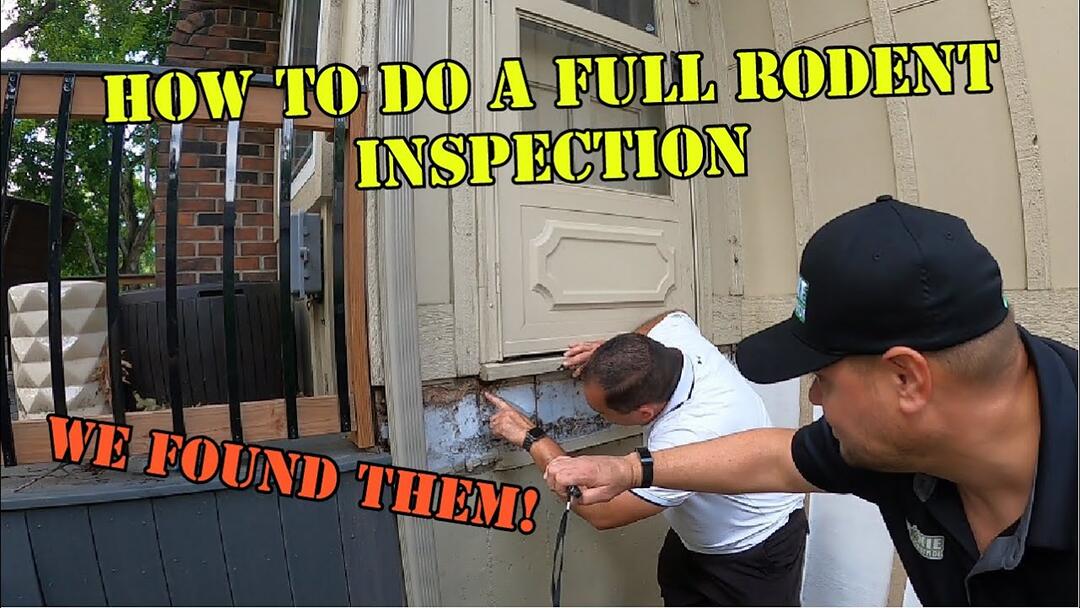
Video: How to do a mouse or rat inspection on a home, from Pest Control Guys.
How the free inspection runs
One visit, in a fixed order, so the sealing is never an afterthought.
-
The call
A dispatcher takes where the noise is, what time of night, how long it has gone on and what you have found, and lines up the nearest licensed contractor.
-
The roofline
Every eave, hip and ridge from a ladder, with the tile course, soffit returns and vents measured and photographed.
-
The attic and the ground
Droppings, runs, nests, chewed wiring and soiled insulation inside; the garage seal, the penetrations and the trees touching the roof outside.
-
The findings and the quote
A written list of openings and evidence, and an itemized quote with trapping, sealing and cleanup on separate lines.
-
Your decision
Book the work, take the findings to a second bid, or do nothing. The inspection cost nothing either way.

What to expect
Here is what the visit looks like from the driveway.
- A ladder at the eave before anyone goes into the attic
- A flashlight walk of the attic end to end
- Every opening measured against a quarter inch
- The fruit trees and palms checked for contact with the roof
- Findings and quote in writing, usually the same day
Why route the inspection through this line
Every eave gets walked, whichever side the noise is on
A roof rat's entry is often on the far side of the house from the room it runs above, and an inspection that looks only where the homeowner points misses it. The contractors we route walk the full roofline, hips and ridges included, and measure each opening against the quarter-inch standard UF/IFAS gives for rat-proofing. The findings list names every one, so the sealing quote is built on the whole roof and the closure list at the end can be checked against it.
UF/IFAS: a quarter-inch opening is the rat-proofing standard; a rat passes a half inch
Findings that work as paperwork
The written findings are shaped for the people who need them next: an ARB in a gated community, a condo manager who has to authorize envelope work, a buyer's agent who wants a clearance letter, an adjuster with a claim for chewed wiring. Each opening is located, sized and photographed, and the species and the evidence are stated plainly. A homeowner who takes the list to a second contractor for a competing bid gets a bid on the same scope, which is the only kind worth comparing.
HomeGuide 2026: standalone rodent inspection $0 to $175 nationally; free here
The credential is checked before the ladder goes up
Trapping rats or mice in a structure for hire in Florida requires at minimum an FDACS Limited Wildlife Management Certificate, and rodenticide work requires a licensed pest control business with a certified operator. Every contractor we route holds the FDACS credential the job calls for, and the number is yours to confirm on the state lookup before the visit. FWC does not license rat trappers and no FWC permit is involved, which is a distinction worth knowing when a quote cites the wrong agency.
FDACS Chapter 482: Limited Wildlife Management Certificate at minimum for structural rat and mouse trapping
What Reddit Says About Rodent Inspections in West Palm Beach
The homeowner threads treat the inspection as the point where a rat job is won or lost, and the first piece of advice is to get more than one. People in r/pestcontrol and r/homeowners describe paying around $75 just to have someone come out and quote, and they tell each other that a single quote is impossible to judge, so a free inspection that produces written findings is worth taking to a second bidder.
The red flags they raise start at the inspection. An inspector who never gets on a ladder, who looks at the attic hatch and not the eave, or who arrives with a bait-station plan already written is called out as someone selling a contract rather than reading the house. So is a company that will not say whether it does the sealing itself, and one whose quote is a single number with a monthly fee somewhere inside it.
The questions they pass around are practical: what exactly is included and what is a separate line item, how many follow-up visits come with the price, whether the exclusion is warrantied and whether it renews, and what happens if the animals come back. Florida commenters add that the inspector should be looking at the tile eaves, the soffit gaps and the palm fronds touching the roof, because that is the highway in.
The people asking are usually exhausted and doubting themselves. A findings list that names the opening and the animal is the first thing that settles the question.
Those are the standards the contractors on this line are asked to meet on every inspection.
A typical inspection call from the south end
The situation: A single-story block ranch from the 1960s south of Southern Boulevard, with a shingle roof replaced once, a grapefruit tree in the back and a queen palm against the side fascia. The owner, a retired teacher living alone, has heard scratching over the kitchen every night since November and has been told by her son it is probably the house settling. She has not slept a full night in three weeks and wants someone to tell her what it is before she pays anyone anything.
What gets done: The contractor we route arrives in the morning, walks the eave from a ladder and finds the soffit return open at the corner nearest the palm, a gable vent with its insect screen chewed through, and the dryer cap with its damper missing. In the attic there are droppings a quarter to half an inch long along the top plate above the kitchen, a flattened run through the blown-in insulation, and a hollowed grapefruit skin near the hatch. The species is a roof rat, the route is the palm skirt to the soffit return, and the findings list says so with photographs. The quote separates trapping with two return visits, three closures with the material named, and a note that the insulation is soiled along one run only.
How it turns out: She books the trapping and sealing that week, has the palm skirt trimmed on the contractor's advice, and is told that the insulation can stay. The noise stops within the first week, the return visit finds nothing fresh, and she keeps the findings and the closure list in the folder with the roof warranty. Her son reads them and stops saying it was the house.
Book the free inspection for this service
Describe what you hear and where, and a dispatcher lines up the nearest FDACS-licensed contractor. The phone is answered at every hour and the inspection carries no charge.
Inspection questions from West Palm Beach homeowners
What people ask before booking the visit.
Booking it
Is the inspection really free, and what is the catch?
It is free, and the arrangement is plain: the contractor who does the walk is the one who quotes the work, so the inspection is how they earn the job. You receive the findings and the itemized quote whether or not you book anything, and the findings are yours to take to a second bidder. Nothing is sold over the phone, nothing is charged for the visit, and no monthly plan is attached to it. National guides price a standalone inspection at up to $175, which is the fee this line waives.
Does somebody need to be at the house, and does the attic have to be cleared first?
Someone needs to be there to let the contractor into the garage and the attic hatch, and to walk through what you have heard and where. Nothing needs to be cleared in advance; the contractor works around stored boxes and notes if anything blocks access to a corner. Pets are best shut in a room while the ladder is up and the attic hatch is open. Expect about an hour on a single-story house and closer to two on a large two-story tile roof.
What comes after
How long does it usually take to get rid of rats once the inspection is done?
With the roofline sealed on the first working visit, most West Palm Beach houses go quiet within one to two weeks. HomeGuide gives two to three days for trapping a small number of animals and one to two months for a severe infestation, and UF/IFAS advises leaving traps at least a week because roof rats are wary of new objects. The inspection is what puts a house at the short end, because it finds every opening before the traps go in. A job that runs for months is almost always one where the eave was never closed.
Can the traps go in on the inspection day?
Yes, when the attic is active and you decide to go ahead. The contractor sets snap traps on the runs the inspection found and schedules the sealing, so the trapping starts while the closures are being fitted or, in a gated community, while the ARB application is being approved. Traps stay in place at least a week. In a condo, unit-side trapping and sealing can start at once while the exterior items wait for the manager.
What if the inspection finds nothing?
Then the findings say so, and that is worth having. The contractor lists the openings that could admit an animal later, which you can close on your own schedule, and notes any tree or hedge in contact with the roof. If the noise continues, a second visit reads the attic again with fresh sign to work from. A sound that turns out to be a palm frond on the roof, an expansion tick in the ductwork or a squirrel at dawn gets named for what it is.
Still have a question? Call (561) 589-3578 and ask.
Book the free inspection
Call (561) 589-3578 at any hour, or send the form and a dispatcher calls you back to set the time. The walk is free and the findings are yours.