Attic Insulation Replacement in West Palm Beach, FL
Insulation that rats have tunneled through and urinated on stops insulating and keeps smelling. Contractors vacuum it out, sanitize the joist bays and blow in new material at the right depth, once the roofline is closed.
What insulation replacement in West Palm Beach includes
Insulation replacement is the removal of contaminated attic insulation, a sanitizing pass over the exposed joist bays, and the installation of new blown-in or batt insulation to the depth the attic should have had. It is the last step of a rodent job, and on many houses it is the only step that improves the house beyond where it started.
The scope runs from two joist bays to the whole attic. The free inspection maps which bays are packed into runways, which are wet, and which are dry and lofted, and the quote prices removal and replacement per square foot against the area that needs it. A contractor who proposes a full replacement when the inspection shows two soiled bays has left something out of the explanation.
The work follows attic cleanup and the sealing before it. New material blown into an attic with an open tile eave is new bedding for the next litter.
Signs the insulation has to come out
Insulation comes out when it is compressed, wet or nested in, and a photograph at the inspection shows which. Rats push through blown-in material along the same route night after night, and the bay flattens into a tunnel a few inches deep. Urine soaks into the material below the runway and stays there. Nests are built from shredded insulation pulled into a mound, usually in a corner nearest the entry point.
- A visible trench through the insulation from the eave toward the center of the attic.
- Discolored, matted or crusted material below a runway, with the ammonia smell strongest there.
- Mounds of shredded material, often with mango seeds, citrus rind or avocado pits inside.
- Droppings a quarter to half an inch long scattered along the trench, the roof rat signature per UF/IFAS.
- Rooms below the affected bays that run warmer than the rest of the house in summer.
The Department of Energy states that compressed insulation does not deliver its rated R-value and that wet insulation performs poorly. Those two mechanisms are the whole argument for replacement; there is no honest percentage to attach to them, and any quote that offers one is guessing.
Blown-in, batts and what goes back in
Blown-in cellulose or fiberglass is what goes back into most Palm Beach County attics, because it fills the irregular bays of a hip roof and goes in through a hose from the hatch. Batts suit a small repair where two bays came out and the rest is batt already. The choice is made on what is there and on access, and either is fine when it reaches the right depth.
Removing what is there
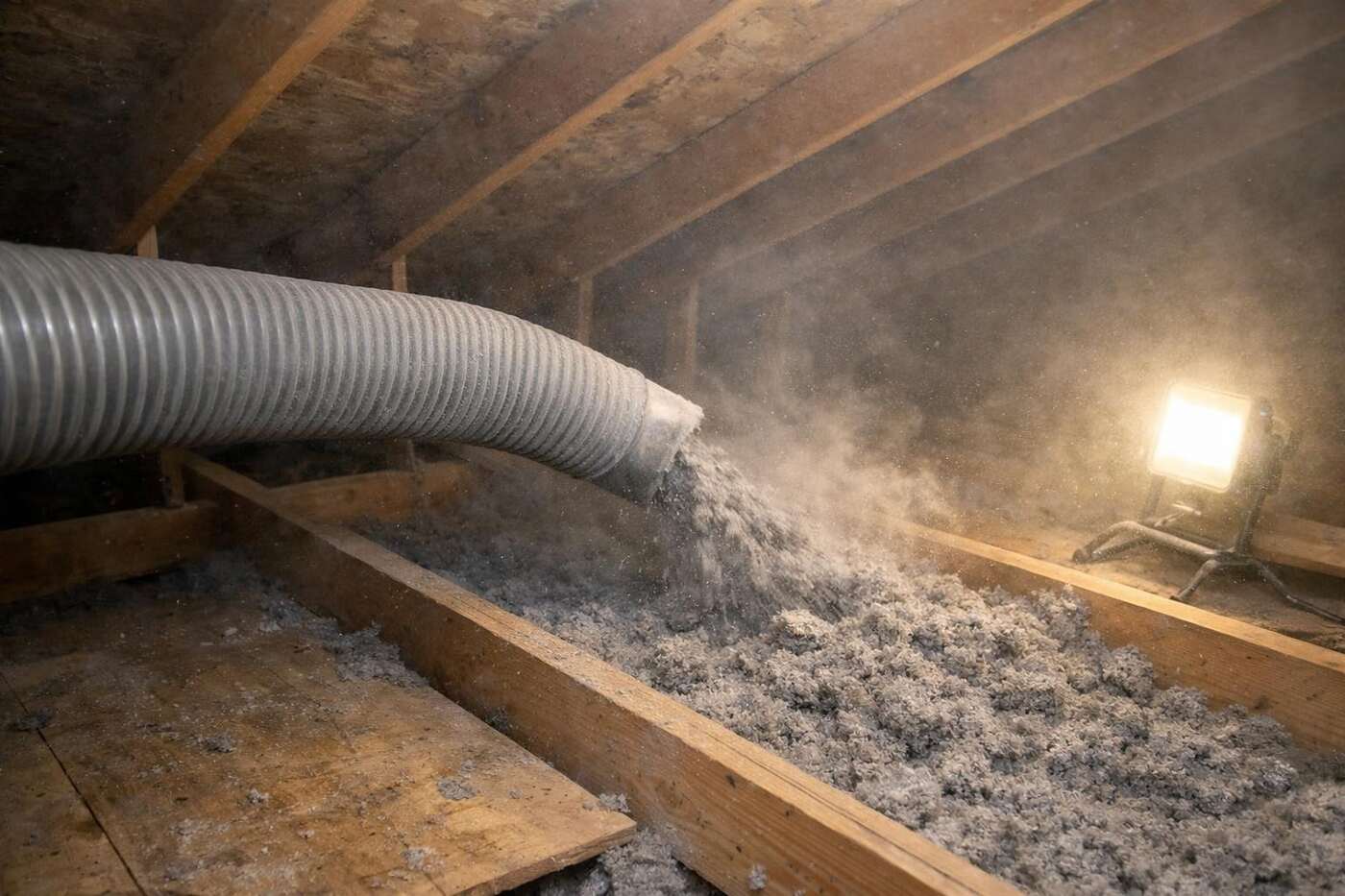
Soiled blown-in material is vacuumed out through a large hose run from the attic to a machine outside, which keeps the dust out of the house. Batts are rolled and bagged in the attic. Either way the contractor works in a respirator and suit, and the exposed decking and joists are treated before anything new goes in.
The AC line set and the ductwork
The runs rats use in a Florida attic often follow the flexible AC ducts and the refrigerant line set, and both get checked for chewing while the bays are open. Gnawed duct insulation is repaired at that point, because it is far cheaper to reach with the insulation out than after.
Is it safe to replace the insulation before the rats are gone?
No, and a contractor who offers it is selling the job twice. New insulation is soft, warm and quiet, which is everything a roof rat wants for a nest, and a female in Florida can produce six to eight young per litter and up to six litters a year per UF/IFAS. The order that holds is: inspection, sealing of the quiet openings, trapping on the active runs, closure of the last runs when the traps go quiet, cleanup, then new insulation.
The one thing that can go in early is a sanitizing pass and the removal of the worst material, when a household cannot live with the smell while the trapping runs. The new material waits until the eave course has its bird stop and the vents have their mesh, and the contractor confirms both before the hose comes up the ladder.
How long does insulation replacement take?
One day for a partial job and one to two days for a whole attic, with the summer heat setting the hours. Vacuuming out a full attic of blown-in material is a morning on a single-story house; blowing the new material in is another few hours once the bays are treated and dry. A two-story house with a large hip roof can take two mornings. The trapping before it is the longer piece, at two to three days for a few animals and one to two months for a severe infestation per HomeGuide.
What insulation replacement costs in West Palm Beach
HomeGuide and Angi put removal and replacement together at $2.50 to $5.50 per square foot nationally, and the free inspection measures the area so that figure becomes a number for your attic.
| Line | Typical band | Source |
|---|---|---|
| Removal and replacement, per square foot | $2.50 to $5.50 | HomeGuide / Angi 2026, national |
| Insulation removal alone | $600 to $1,200 | Angi, Tampa figures |
| Replacement on top of removal | $1,000 to $3,000 | Angi, Tampa figures |
| Cleanup before the insulation | $600 to $2,500 | HomeGuide 2026, national |
The area is what moves the figure, so ask for the square footage on the quote and check it against the house. A 1,600 square foot single-story ranch has roughly that much attic floor; a two-story house has less attic per square foot of living space. Depth matters too: material blown to a shallow depth is cheaper and underperforms, so ask for the target depth in writing.
The Angi figures are Tampa data, the only Florida metro Angi publishes, and are labeled as such. There is no Palm Beach County figure to quote, and no one who claims one has a source.
Insulating a West Palm Beach attic: heat, ranch stock and tile
Three local conditions make this job different from the version in the national guides. The attic under a Palm Beach County roof is very hot for half the year, so soiled material breaks down faster and the working day is early morning. The 1950s to 1970s ranch stock in the south end and around Palm Beach Lakes was often built with little insulation or with material that has settled to a few inches, so a rodent job frequently ends with the attic better insulated than it has been in decades. And on the 1980s to 2000s tile-roof stock the runs start at the eave course, so the soiled bays sit along the perimeter and the center of the attic is often untouched.
The guides also price crawl spaces and basements that a slab-built house here does not have, so the Palm Beach County version is usually a single attic floor and nothing else. In the downtown towers there is often no attic at all, and a ceiling void shared between units is an association matter under condo and HOA rodent control.
What to check on the insulation contractor
Check the sequence, the license behind the trapping, and the numbers on the quote. The trapping that precedes this work is regulated: trapping rats or mice in, on or under a structure for hire in Florida requires at minimum an FDACS Limited Wildlife Management Certificate, and every contractor we route holds the credential the job needs. Confirm the number on the FDACS lookup before anyone climbs into the attic.
- Ask to see the photographs of the closed openings before the new material is booked.
- Ask for the square footage, the material and the target depth in writing.
- Ask whether removal and replacement are separate lines, and whether only the soiled bays are coming out.
- Ask whether the ducts and the AC line set are checked for chewing while the bays are open.
- Ask how the old material leaves: a vacuum hose to a machine outside is the clean way.
The about page covers who attends; the contact page has the hours and address.
Services that run alongside this one
A West Palm Beach rodent job is rarely one service on its own; these are the steps that usually sit before or after this one.
- Attic Cleanup and Decontamination: Droppings, nests and urine-soaked insulation bagged out of a baking attic, and the surfaces beneath them treated.
- Rodent Exclusion: Closing the tile eave with a metal bird stop, then every vent, soffit return and line-set sleeve, to the quarter-inch standard.
- Roof Rat Removal: Snap trapping along the runways of the palm rat that fills Palm Beach County attics, sequenced with sealing.
The about page explains how the line works and which credential to check, and the phone is answered at any hour.
Taking out blown-in insulation
What the removal actually involves.
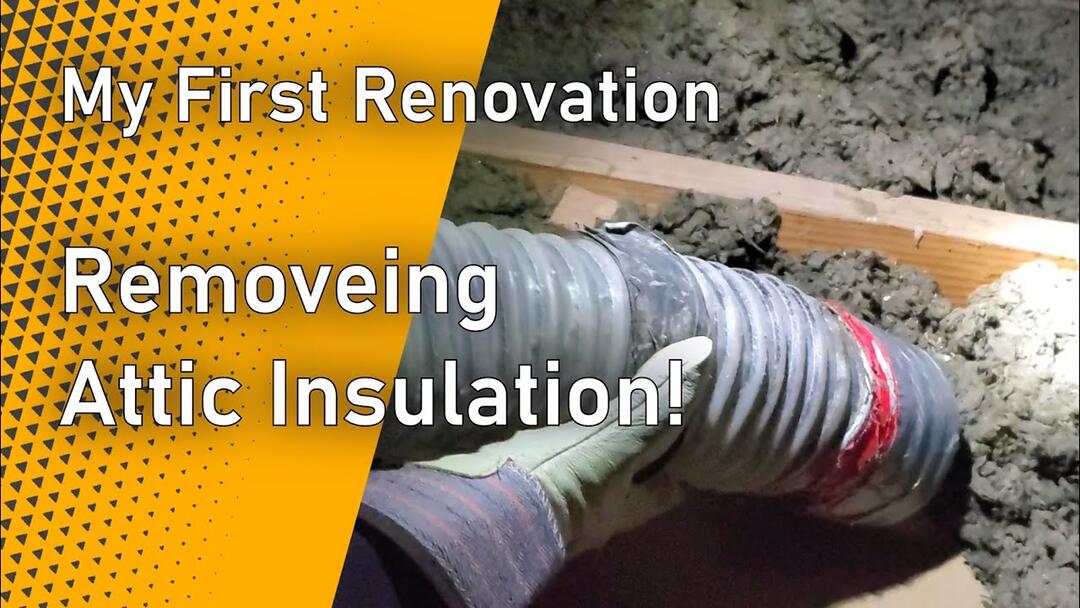
Video: How To Remove Blown-in Attic Insulation, from Jay Schmidt.
How an insulation replacement runs
Five steps, with the new material last, because blowing it into an attic with an open eave is bedding for the next litter.
-
Map the bays
At the free inspection each joist bay is marked as dry, compressed, wet or nested, and the area to be replaced is measured.
-
Seal and trap first
Bird stop, mesh and traps run their course; the insulation is booked once the traps have been quiet about a week.
-
Vacuum out and bag
Soiled blown-in material goes out through a hose to a machine outside; batts are rolled and bagged in the attic.
-
Treat and repair
Exposed decking and joists are sanitized, and chewed duct or line-set insulation is repaired while it is reachable.
-
Blow in and measure
New material goes in to the written depth, with a depth check you can see before the hatch is closed.
What to expect
The visit keeps to a fixed order so the sealing is confirmed before any new material comes up the ladder.
- A look at the closed eave and vents before the machine is unloaded
- A hose from the attic hatch to a vacuum outside, and plastic along the route
- The contractor in a respirator and suit for the removal and treatment
- The duct runs and the AC line set checked and photographed while the bays are open
- A depth measurement of the new material, and a written summary with the square footage
Why the insulation is booked through this line
Only the bays that need it
The inspection maps the attic bay by bay, and the quote prices the area that is compressed, wet or nested rather than the whole floor by default. On a tile-roof house the soiled bays usually run along the eave line and the center is dry, which can halve the job. The contractors we route write the square footage on the quote so you can check it against the house.
DOE: compressed insulation does not deliver its rated R-value and wet insulation performs poorly
The eave is confirmed closed before the hose goes up
New insulation is what a roof rat wants for a nest, and a Florida female can raise up to six litters a year. Every job through this line confirms the bird stop and the mesh in place and the traps quiet before any material is blown in, so the new attic stays new.
UF/IFAS: six to eight young per litter, up to six litters a year in Florida
A per-square-foot band you can check
Removal and replacement together run $2.50 to $5.50 per square foot nationally, and the quote shows the area, the material and the depth so the arithmetic is visible. The Angi Tampa figures for removal and replacement are printed alongside as the nearest Florida reference, labeled as Tampa data.
Removal and replacement $2.50 to $5.50 per square foot, HomeGuide / Angi 2026
What Reddit Says About Attic Insulation Replacement in West Palm Beach
The insulation threads are where the biggest numbers in the corpus show up, and the biggest anger. Quotes for work described the same way span from under two thousand dollars to tens of thousands, and the question under nearly every post is whether the writer is being cheated. The answer they give each other is to get more than one bid for the same written scope and to ask for the square footage and depth on paper.
The red flags: a full attic replacement quoted on the first visit before anyone has trapped a rat; a company that does the insulation but not the sealing, or the reverse; and a restoration bundled into a single figure with the removal and a monitoring plan. People who paid for new insulation with the eave still open describe the noise starting again within the month.
Questions they tell each other to ask: does the company do the repair and sealing work or only the trapping; is only the soiled material coming out; what depth is going back in; how is the old material leaving the house; and what is the written record for insurance.
The corpus is also clear that the timeline is longer than anyone expected. Two months is common before the insulation stage arrives, and the people who were told that up front are the ones who are calm about it.
The bay-by-bay map and the written square footage from the free inspection are the answer to most of those threads.
A typical insulation job on a Grandview Heights bungalow
The situation: A 1920s wood-frame bungalow in Grandview Heights with a hip roof, a tight attic reached through a closet hatch, old batt insulation between the joists, and an avocado tree touching the rear roofline. Roof rats used a pulled soffit return for most of a summer before the trapping through this line took five animals over three weeks; the return was closed with steel mesh and a corroded gable screen was replaced.
What gets done: With the traps quiet for a week, the contractor confirms the mesh, then rolls and bags the batts along the rear half of the attic, where the runway and two nests were. The front half is dry and stays. The exposed joists and decking are treated, a chewed section of flexible duct is taped and re-wrapped, and blown-in fiberglass goes in over the rear half to the written depth, feathered into the old batts at the middle.
How it turns out: One morning of work, a quote with removal and replacement as separate lines against a measured area, a depth photograph, and a note to have the avocado limb cut back from the roof. The rear bedrooms run cooler that August than they did the year before.
Book the free inspection for this service
Describe what you hear and where, and a dispatcher lines up the nearest FDACS-licensed contractor. The phone is answered at every hour and the inspection carries no charge.
Insulation questions from West Palm Beach
What comes up once the trapping is over and the attic is still the way the rats left it.
Scope
Does all of the insulation have to come out?
Only the bays that are compressed into runways, wet with urine or built into nests. The inspection marks each bay, and on a tile-roof house the soiled material usually runs along the eave line while the center of the attic stays dry and lofted. A quote for a full replacement should come with a photograph of every bay that justifies it.
Should the new insulation be cellulose or fiberglass?
Either does the job when it goes in to the right depth. Blown-in fiberglass is the more common choice in Palm Beach County attics because it fills the irregular bays of a hip roof and handles the heat and humidity well; cellulose is fine where the attic is dry. Batts suit a small repair. Ask for the material and the target depth in writing.
Can rodent-soiled insulation make the house smell in summer?
Yes, and it is usually the first thing a household notices. Urine soaked into blown-in material is warmed by the roof deck every afternoon and the ammonia smell comes down through the ceiling and the AC returns. Treating the surfaces and removing the soaked bays ends it; spraying deodorizer over the bays and leaving them is the shortcut a cheap quote sometimes hides.
Cost and timing
How is the price worked out?
By area. HomeGuide and Angi put removal and replacement at $2.50 to $5.50 per square foot nationally, and the quote multiplies that by the measured area of the affected bays. Angi's Tampa figures, the only Florida data published, put removal alone at $600 to $1,200 and replacement on top at $1,000 to $3,000. Ask for the square footage and check it against the house.
How long after the trapping can the new insulation go in?
About a week after the traps go quiet, and only once the last openings are closed. That gives time to be sure no animal is still inside, which matters because new material is exactly what a roof rat wants for a nest. The cleanup of the surfaces can happen in the same visit as the removal, and the new material follows the same day or the next morning.
Still have a question? Call (561) 589-3578 and ask.

Book the free inspection and get the attic measured
The inspection maps the bays and measures the area, so the insulation quote is a number rather than a guess. Call at any hour or send the form.