Rodent Removal in Grandview Heights
Grandview Heights sits between downtown and the south end, a district of small early cottages and bungalows on tight lots. Restoration work is the thing that most often leaves a roofline open here.
Renovation is how most of these houses get opened
Grandview Heights has been renovated house by house for years, and a half-finished or old trade detail is the most common way in on a restored cottage.
The pattern repeats: a new air conditioning line set run through a wall with the hole left oversized, a bathroom vent fan ducted into the attic with no exterior termination, a replaced gutter leaving a gap behind the fascia, a new roof covering that stops short of the old fascia line, recessed lights cut into a ceiling that opens into the attic, and a kitchen remodel that left a plumbing chase open to the soffit above the cabinets. Not one of these is a construction fault that anyone would notice from the street, and each is larger than the quarter-inch opening UF/IFAS gives as the rodent-proofing standard.
Older unrestored houses in the district have the more familiar problems: sprung wood soffits, corroded vent screening, and raised floor structures on a few of the earliest cottages. Both versions are straightforward once they are found, which is why the inspection here is slower and more detailed than it is on a modern tile house with one long eave.
What the downtown edge adds
The district sits against the downtown and convention center edge, which puts commercial waste handling and construction activity inside the range rodents work.
Two things follow. First, pressure is steady rather than seasonal, because dumpsters, restaurant waste and construction sites provide food and harborage all year, and a roof rat ranging about 150 yards from its den, as UF/IFAS describes, crosses easily from a commercial block into a residential one. Second, the species mix broadens: Norway rats, which work at ground level in burrows, dumpster surrounds and storm drains, are more likely near the commercial edge than they are in the middle of a residential district, while roof rats still dominate in the roofline.
That matters for where the work goes. Roof rat findings send the sealing up to the eave, the vents and the roof penetrations. Norway rat findings send it down to the slab line, the garage door, the utility penetrations near grade and any burrowing along a foundation or a wall. The droppings tell the contractor which one is present before anything is quoted, since the roof rat's are a quarter to half an inch with pointed ends.
How the work is done on a Grandview Heights cottage
The inspection walks the exterior, the attic and the renovation history, then the sealing and trapping run in the usual order.
Asking what has been done to the house in the last ten years is one of the more useful parts of the inspection here. A reroof, an air conditioning replacement, a kitchen remodel and a gutter job each leave a known signature, and knowing the sequence shortens the search. Openings with no activity get closed on the first visit. Live runs stay open until the trapping finishes, which takes at least a week because roof rats will not approach a new object quickly.
Because these houses are small, a full job is often modest: four to seven closures, a week and a half of trapping, and a sweep of an attic that has bare decking and little insulation. Where a renovation left soiled insulation in a sealed cavity, attic cleanup becomes its own line. The usual path is a free inspection, then roof rat removal, then rodent exclusion, and the contact page has the hours.

Rodents in the attic
What is happening above the ceiling, explained.
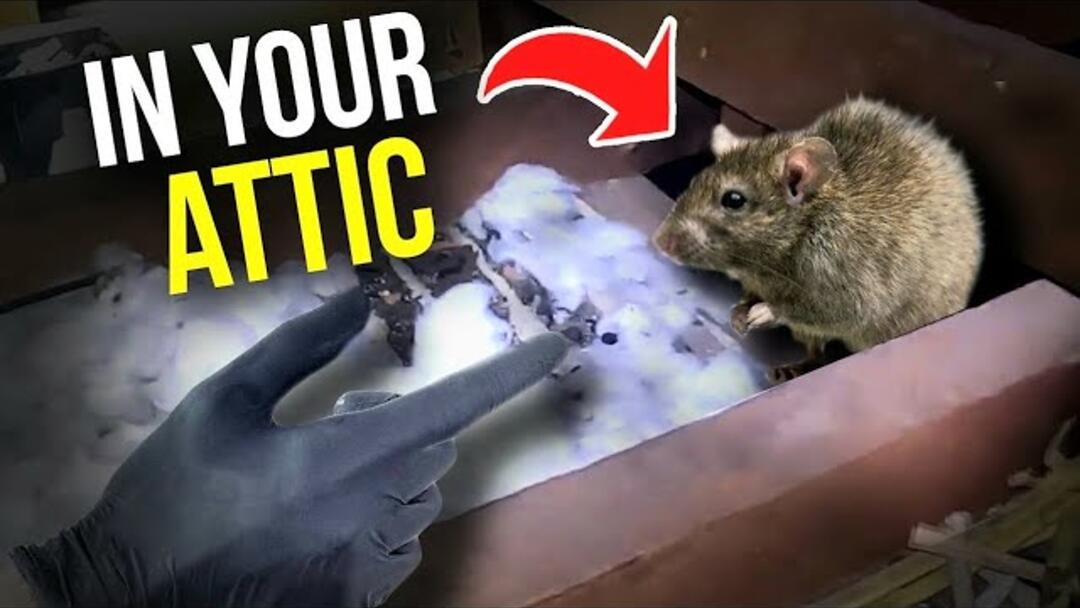
Video: Rodents in your ATTIC!? Here's what you do, from Twin Home Experts.
Why Grandview Heights owners use this line
Trade gaps get found because they get looked for
An oversized line-set penetration, a fan ducted into the attic and a gutter replaced over an open fascia are the three findings that repeat on restored cottages here. A contractor who walks the renovation history rather than only the eave line finds them in one visit instead of returning twice.
UF/IFAS: a quarter inch opening is enough, and every one of those details is larger
The species decides the direction of the work
Near the commercial edge both species are in play, and sealing the roofline on a Norway rat problem wastes the money. Identification from droppings, damage pattern and burrowing happens before the quote, so the closures go where the animals are.
UF/IFAS: roof rat droppings a quarter to half an inch, banana shaped with pointed ends, unlike the blunt-ended Norway rat
Small house, small honest job
Most of these cottages need a handful of closures and a week and a half of trapping, and the quote should look like that. A full-home exclusion figure at the top of the published band on a nine-hundred-square-foot cottage is a number to question, and the itemized version is what gets sent here.
HomeGuide 2026: trapping and removal $250 to $1,200 and full-home exclusion $500 to $2,500 nationally
A typical Grandview Heights call
The situation: A small 1920s cottage renovated about eight years ago, new metal roof, new air conditioning, a remodeled kitchen with a soffit above the cabinets, and a converted garage now used as a studio. The owner hears something in the kitchen soffit in the early evening and has found droppings on top of the refrigerator.
What gets done: The inspection finds the line-set penetration at the rear wall packed with foam that has been chewed open, a bathroom fan duct that terminates loose in the attic, and a gap behind the new gutter at the southeast corner. The kitchen soffit connects to the attic above the cabinet run through an unsealed plumbing chase, which is how the animal is getting to the refrigerator. The foam is cut out and replaced with steel wool and sheet metal, the fan duct is terminated through the wall properly, and the gutter gap is closed. Traps go in the kitchen soffit void and along the attic top plate above the cabinets, then stay eight days.
How it turns out: Two animals, both out within a week, and no further activity on the refrigerator. The chase is sealed at the soffit after the second trap check. The owner's bigger surprise is the foam: it had been in place since the renovation and looked sound from the ground.
A free inspection on your street
The contractor covering this part of West Palm Beach walks the eave course, the attic and the yard trees, then writes an itemized quote. Nothing is owed for the visit.
Grandview Heights questions
What the restored-cottage streets ask on the first call.
Finding the way in
How do they get in when the house was fully renovated?
Through the renovation itself, usually. Oversized air conditioning line-set holes filled with foam, bathroom fans ducted into the attic with no exterior termination, gaps left behind a replaced gutter, and plumbing chases open between a kitchen soffit and the attic are the findings that repeat on restored cottages. All of them are bigger than the quarter inch UF/IFAS gives as the rodent-proofing standard, and they stay invisible from the street.
Is foam ever acceptable for sealing?
As a filler behind steel, yes. On its own, no: rodents chew straight through expanding foam, and a foamed penetration that looks sound from below is one of the most common findings on a renovated house here. The durable version is steel wool or copper mesh packed tight, then sheet metal or hardware cloth fixed over it, with sealant used only to finish the edge rather than to do the work.
Scope and cost
What should a job on a small cottage cost?
Read it against the published bands and expect the lower half. HomeGuide 2026 puts trapping and removal at $250 to $1,200 and full-home exclusion at $500 to $2,500 nationally, and a nine-hundred-square-foot cottage with five closures has no business sitting at the top of either. Angi's Tampa figures, the nearest Florida reference published, put exclusion at $550 to $1,642. Ask for trapping, sealing and any cleanup as three lines, and ask how many closures the figure covers.
Does the converted garage or studio get included?
It is inspected as part of the same visit and priced as part of the same job where it shares a wall or a roof with the house. Conversions are a common weak point: a garage door opening that was infilled, a slab junction that was never sealed, and a roof that was extended to cover it. Where the studio is fully detached, the closures there are a separate short line rather than a second full job.
Still have a question? Call (561) 589-3578 and ask.

Book a free Grandview Heights inspection
The phone is covered around the clock, weekends included. Describe the noise and what has been renovated, and the contractor we route will find the openings and itemize the quote.