
Commercial Rodent Control in West Palm Beach, FL
A restaurant, a warehouse or an office suite has a health inspector, a landlord and a reputation in the mix alongside the rodents. The work gets documented as carefully as it gets done.
What commercial rodent control in West Palm Beach includes
A commercial job has four parts that a house does not: a documented inspection, structural sealing agreed with whoever owns the building shell, a monitoring and trapping program that runs on a schedule, and a written record an inspector or a head office can read.
The inspection covers the exterior shell first, since that is where the problem begins: dock doors and their sweeps, roof penetrations and curbs, the gap behind a sign band, utility sleeves at the slab line, grease interceptor lids, vegetation touching the parapet, and dumpster enclosures. Inside, it covers the dry store, the line, the dish area, the false ceiling, the wall void behind the cook line, under-counter voids, and the electrical and data chases that run between tenant spaces in a strip center.
The program that follows is written down: where each device sits, what was found at each visit, what was sealed, and what the property still needs. That record is the difference between passing a health inspection and arguing with one. Most Palm Beach County commercial tenants also need the landlord to authorize exterior work, which is handled the same way an association request is handled.

The West Palm Beach property types this covers
Four commercial settings account for most of the calls in this county, and each has its own entry route.
- Restaurants and bars on Clematis Street and along Dixie Highway: older downtown buildings with shared party walls, rear alley service, and false ceilings that run the length of several tenancies. The entry is usually a rear door sweep, a utility sleeve or a neighboring vacancy.
- Strip center retail and medical suites: continuous roof decks and demising walls that stop at the ceiling grid instead of the deck, so a roof rat in one unit has the whole center. Sealing one suite and ignoring the roofline moves the animals next door.
- Warehouses and light industrial near the Port of Palm Beach and along Australian Avenue: dock levelers, roll-up door corners and overhead penetrations, with Norway rats at ground level as well as roof rats above. These are the properties where the ground-burrowing species matters most.
- Offices, hotels and mixed-use podiums downtown: trash rooms, loading bays, and landscape beds planted hard against the building, plus the interior chases that serve every floor.
Food service carries the highest stakes and the tightest access window. Visits are scheduled before opening or after close, and the device placement is chosen so nothing sits where a guest or an inspector will see it.
Why the shell gets sealed before the program starts
A monitoring program on an open building is a subscription to the same problem, so the sealing comes first wherever the lease and the landlord allow it.
The order is: inspect and document, close the openings in the shell, trap out what is already inside, then run monitoring at a frequency that matches the risk. Interior devices are there to catch what gets past a closed shell and to prove the space is clean, and they do neither job on a building with a quarter-inch gap at a dock door. UF/IFAS puts the rodent-proofing standard at a quarter inch of opening, and a dock door that does not seat on its own threshold fails that standard along its whole width.
Trapping against rodenticide in a food business
Inside the envelope of a food business, mechanical devices do the work and bait belongs outside in tamper-resistant stations where it belongs at all. Two reasons: the EPA notes that most rodenticides are anticoagulants with death typically four days to two weeks after feeding begins, which in a restaurant means a carcass in a wall void above the line, and UF/IFAS points out that trapping reduces the risk of a poisoned animal dying inside a building. A carcass over a kitchen is a closure risk on its own.
What a landlord has to approve
Roof penetrations, dock hardware, sign bands, parapet work and exterior door hardware are usually landlord property under a commercial lease. The contractor writes the list, the tenant sends it, and the interior work proceeds in the meantime. Tenants who wait for the landlord before starting anything lose weeks in the only season that matters to them.
What a health inspector looks for, and what the paperwork should show
An inspector wants evidence of activity, evidence of exclusion and evidence of a program, and the third one is where businesses fail on paper despite doing the work.
The file a contractor should leave behind has the inspection findings with dates, a device map, a log of every visit and what it found, photographs of sealed openings, and the open items still assigned to the landlord. When a district or corporate auditor asks what is being done about a droppings finding in a dry store, that file answers in thirty seconds.
The evidence an inspector reads in the room is straightforward: droppings along wall and shelf lines, gnaw damage on packaging, grease rub marks on the floor at the wall junction, and dirty device trays. UF/IFAS describes roof rat droppings as a quarter to half an inch long and banana shaped with pointed ends, which is how a finding in a dry store gets identified as roof rat rather than mouse, and that identification changes where the sealing work goes: up at the roofline for roof rats, down at the slab line and the dock for Norway rats.
What commercial rodent control costs in West Palm Beach
Commercial pricing is quoted per property after a walk-through, and the published residential bands are still the right reference for the individual pieces of work because the trades and materials are the same.
| Component | Published band to read it against | Source |
|---|---|---|
| Trapping and removal phase | $250 to $1,200 | HomeGuide 2026, national |
| Structural sealing of the shell | $500 to $2,500 for a building envelope | HomeGuide 2026, national |
| Cleanup and decontamination of a soiled area | $600 to $2,500 | HomeGuide 2026, national |
| Removal visit, Florida reference | average $1,078, typical $441 to $1,716 | Angi, Tampa figures |
What moves a commercial quote: the size of the shell, how much of it is landlord property, the access window, whether the work has to happen between midnight and five, the number of tenancies sharing the roof deck, and the monitoring frequency the business or its insurer requires. A strip center suite with a clean roofline is a small job. A restaurant with a shared false ceiling and an alley dock is a project.
Ask for the sealing and the monitoring as separate lines, and ask what the monitoring costs in month four rather than month one. A low first invoice with a long monitoring commitment behind it is the structure to read carefully.
Local conditions that drive commercial rodent pressure here
Four things about Palm Beach County make commercial rodent pressure steady rather than seasonal.
The climate has no winter die-off, so roof rats breed all year and a building has no quiet months. Yard and street fruit keeps outdoor populations high: mango through the summer, citrus from late fall into spring, avocado in between. Downtown and the older commercial corridors have mature canopy and ficus hedging that run right up to parapets and sign bands, giving an arboreal animal a bridge onto the roof; UF/IFAS notes roof rats travel along branches, wires and palm trunks and range about 150 yards from the den, which is most of a shopping center.
Then there is the water. The Port of Palm Beach, the marinas, the seawalls along the Intracoastal and the older waterfront commercial stock are classic Norway rat ground, which is the species that works the dock line and the grease interceptor instead of the roof. Hurricane season from June to November finishes the list: flooding pushes ground rodents out of harborage, wind opens roof edges and soffits, and debris piles in a parking lot become harborage for weeks. A property with a storm repair outstanding is an open property.
What to check on a commercial pest contractor
Check the license category, the documentation and the exclusion commitment before you sign anything with a term on it.
- Applying rodenticide for hire in Florida requires an FDACS-licensed pest control business with a certified operator, and trapping in, on or under a structure for hire requires at minimum an FDACS Limited Wildlife Management Certificate. Every contractor we route holds the credential the work calls for; ask for the number and confirm it through the FDACS lookup.
- Ask for a sample service report from another commercial account, with the client details removed. If they cannot produce one, the documentation is not a real part of their service.
- Ask what structural sealing is included and what is quoted separately, and ask for the landlord items listed on their own page so you can forward it.
- Ask whether interior bait is used in a food area, and why.
- Ask about the access window in writing: before open, after close, or during a weekday.
- Ask what happens at month three when the monitoring finds nothing, and what the contract says about ending it.
Commercial work usually runs alongside a documented rodent inspection and the sealing described under rodent exclusion, and a landlord or insurer may want the result in writing as a clearance letter. The about page explains how the line works and the contact page has the hours.
Services that run alongside this one
A West Palm Beach rodent job is rarely one service on its own; these are the steps that usually sit before or after this one.
- Rodent Exclusion: Closing the tile eave with a metal bird stop, then every vent, soffit return and line-set sleeve, to the quarter-inch standard.
- Rodent Inspection: A free walk of the eave course, the attic and the yard trees that sets the order of the job and produces the written quote.
- Rodent Clearance Letters: A written inspection report for a condo closing, a lease, an association file or an insurance claim.
The about page explains how the line works and which credential to check, and the phone is answered at any hour.
Pest control in a food premises
The standard a commercial kitchen is held to.
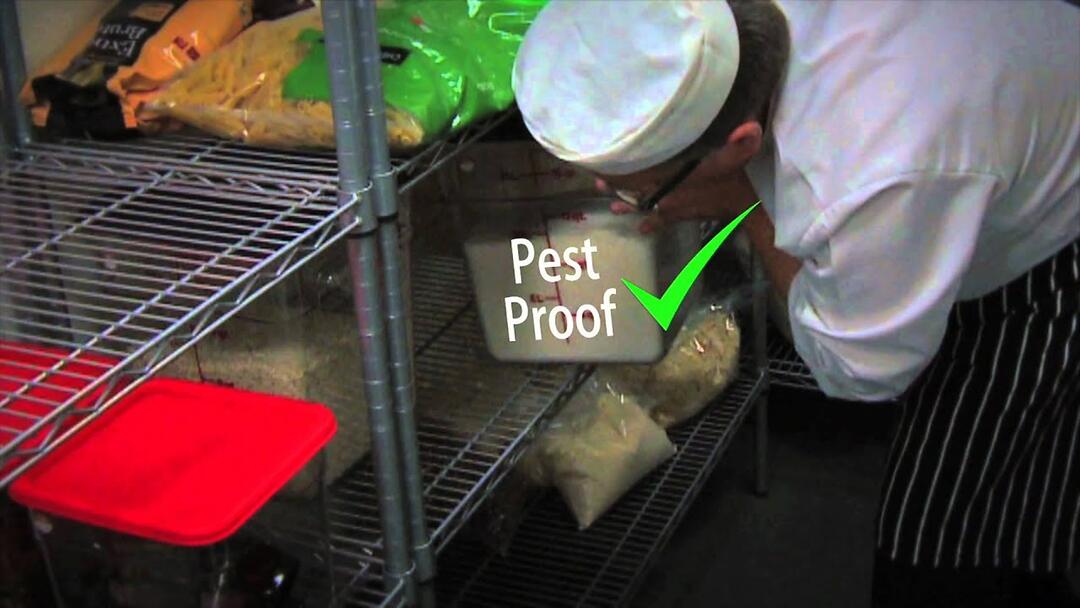
Video: Food safety coaching: pest control, from Food Standards Agency.
How a commercial job is run
Five stages, with documentation produced at each one rather than assembled at the end.
-
Walk-through and written findings
Exterior shell, interior voids and storage areas are inspected and photographed, and the findings are written up with the species identified from the droppings and the damage.
-
Split the list: tenant and landlord
Openings are sorted into what the tenant can close and what sits in landlord property, so the forwarding email writes itself and nothing stalls.
-
Seal the shell
Dock sweeps, door hardware, roof penetrations, utility sleeves and sign band gaps are closed with steel and hardware-grade materials at the quarter-inch standard.
-
Trap out the interior
Mechanical devices go on the active runs in the voids and storage areas, placed out of sight of customers and checked on a fixed schedule until the catch stops.
-
Monitor and document
A device map and a visit log are kept current, with photographs of closed openings and a standing list of anything still outstanding on the property.

What to expect
A commercial visit is built around your access window and your inspection file.
- A scheduled arrival outside trading hours where the business needs it
- Devices placed out of customer sightlines and off food-contact surfaces
- A written visit record left on site or emailed to the manager
- Photographs of every opening closed, dated
- A standing list of open items assigned to the landlord or the property manager
Why a commercial property uses this line
The paperwork is a deliverable in its own right
Every visit produces a dated record with findings, device locations, closures and open items, because a restaurant or a medical suite is judged on what it can show as much as on what is true. A manager who can hand an inspector a file with photographs of sealed penetrations has a different conversation from one describing work from memory.
UF/IFAS: roof rat droppings a quarter to half an inch, banana shaped with pointed ends, which is how a finding gets identified in writing
The shell comes before the stations
Interior devices on an open building catch animals forever. Dock sweeps, roof penetrations, utility sleeves and sign band gaps are closed to a quarter-inch standard first, and the monitoring that follows is then a check rather than a harvest. This is also the honest version commercially, since the sealing is the part that ends the monthly invoice.
UF/IFAS: a quarter inch is the opening standard for rodent-proofing a structure
No carcass over the cook line
Inside a food business the work is mechanical, and any bait stays outside in tamper-resistant stations. An anticoagulant animal that dies in the void above a kitchen is a closure risk and a smell that cannot be explained to guests, which is a far more expensive outcome than a week of trapping.
EPA: anticoagulant rodenticides typically kill four days to two weeks after feeding begins
What Reddit Says About Commercial Rodent Control in West Palm Beach
The commercial threads are written by restaurant owners, kitchen managers and retail tenants, and their complaints are different from a homeowner's. The recurring one is the monthly contract that changes nothing: a technician arrives, checks stations, writes a ticket, and the droppings in the dry store are there the next month. The advice they give each other is to ask what structural work has been done, and to treat a program with no sealing in it as a rental agreement for bait boxes.
The second theme is the landlord. Tenant after tenant describes finding the entry in landlord property, a roof curb or a dock door or the vacant unit next door, and then waiting. The approach that works in those threads is a written, photographed list sent to the property manager on day one, with the tenant-side work started immediately rather than held.
Red flags they name: an annual contract signed before any inspection; interior bait in a food area; a technician who will not go on the roof; no written report; and a company that blames the neighboring tenant without inspecting the shared ceiling.
The questions they tell each other to ask: what are you sealing and what is quoted separately, will you come before we open, what does the report look like, who identifies the species, and what happens to the price when the catch stops. Several also recommend photographing everything yourself, because the file is what the inspector reads.
The free inspection here produces the written findings and the split tenant and landlord list those threads keep asking for.
A typical commercial job at a downtown restaurant
The situation: A restaurant in an older two-story building off Clematis Street, alley service at the rear, a false ceiling that runs through into the neighboring tenancy, and droppings on a dry-store shelf found during a pre-shift check. The manager has a health inspection due, a landlord who owns the roof and the rear door, and no report from the company that has been servicing the stations for two years.
What gets done: The walk-through identifies the droppings as roof rat from the size and shape, finds a worn rear door sweep with a half-inch gap at one corner, a disused conduit sleeve above the dish area, and ficus growing onto the rear parapet. The false ceiling shows a run along the demising wall into the next unit. Tenant-side items are closed that week: the sleeve is packed and sealed, the dry-store shelving is pulled off the wall, and traps go on the run above the dish area and in the dry store. The sweep, the parapet vegetation and the demising wall above the grid go on a written landlord list with photographs, sent by the manager the same afternoon.
How it turns out: Catch stops in the second week, the dry store stays clean through three visits, and the manager has a dated file with findings, photographs and the landlord list when the inspector arrives. The contractor visits before opening, so no device is ever in a guest's line of sight.
Book the free inspection for this service
Describe what you hear and where, and a dispatcher lines up the nearest FDACS-licensed contractor. The phone is answered at every hour and the inspection carries no charge.
Commercial questions from West Palm Beach operators
What managers and owners ask before they change contractors.
Program and compliance
Do I need a monthly contract, or can this be a one-time job?
Both exist and the right answer depends on the building. A retail suite with a sound shell and one sealed entry can be a project with a short monitoring tail and then nothing. A food business with an alley dock, a shared false ceiling and deliveries arriving daily has ongoing exposure and usually wants a standing program, often because an insurer or a franchisor requires one. What should never happen is a long program sold before anyone has inspected the shell.
Will a health inspector accept trapping instead of bait stations?
An inspector is looking for evidence that activity is being controlled and documented, and mechanical devices plus a service log answer that. Keeping rodenticide out of the food envelope is the standard professional position rather than a compliance gap. What fails an inspection is unidentified droppings with no record of action, so the log and the photographs of closures matter more than which device is in the corner.
Can the work happen outside trading hours?
Yes, and for food service it usually has to. Visits are scheduled before open or after close, and device placement is chosen so nothing is visible to guests during service. Put the access window in writing in the agreement, including who holds keys or an alarm code, because a missed window is the most common reason a program drifts.
Building and landlord
The entry point is in my landlord's roof. What now?
The tenant-side work starts immediately and the landlord items go out the same day as a written list with photographs, locations and what each one needs. Roof penetrations, dock hardware, sign bands, parapet vegetation and exterior doors are usually landlord property under a commercial lease. Property managers act on a specific photographed list far faster than on a phone call, and the list also protects the tenant if activity continues.
My neighbor in the strip center has rats. Does that make this pointless?
It makes the roofline and the demising wall the priority instead of the interior. Many strip centers have demising walls that stop at the ceiling grid rather than the roof deck, so the whole center is one void, and a roof rat ranging about 150 yards from its den, as UF/IFAS describes, covers all of it. Closing your unit to the deck and getting the center's common roofline onto the manager's list is what changes the outcome.
Still have a question? Call (561) 589-3578 and ask.

Book a free commercial walk-through
The inspection is free and produces the written findings, the device plan and the landlord list. Call at any hour to set a time outside trading.