Dead Rodent Removal in West Palm Beach, FL
A carcass in a wall cavity or over a ceiling announces itself for a week or more before it fades. The contractor locates it, opens the smallest access that reaches it, removes it, and treats what is left.
What dead rodent removal in West Palm Beach covers
The job is four things: finding the carcass, reaching it with the least damage, taking it out with the contaminated material around it, and treating the cavity so the residue stops feeding the smell.
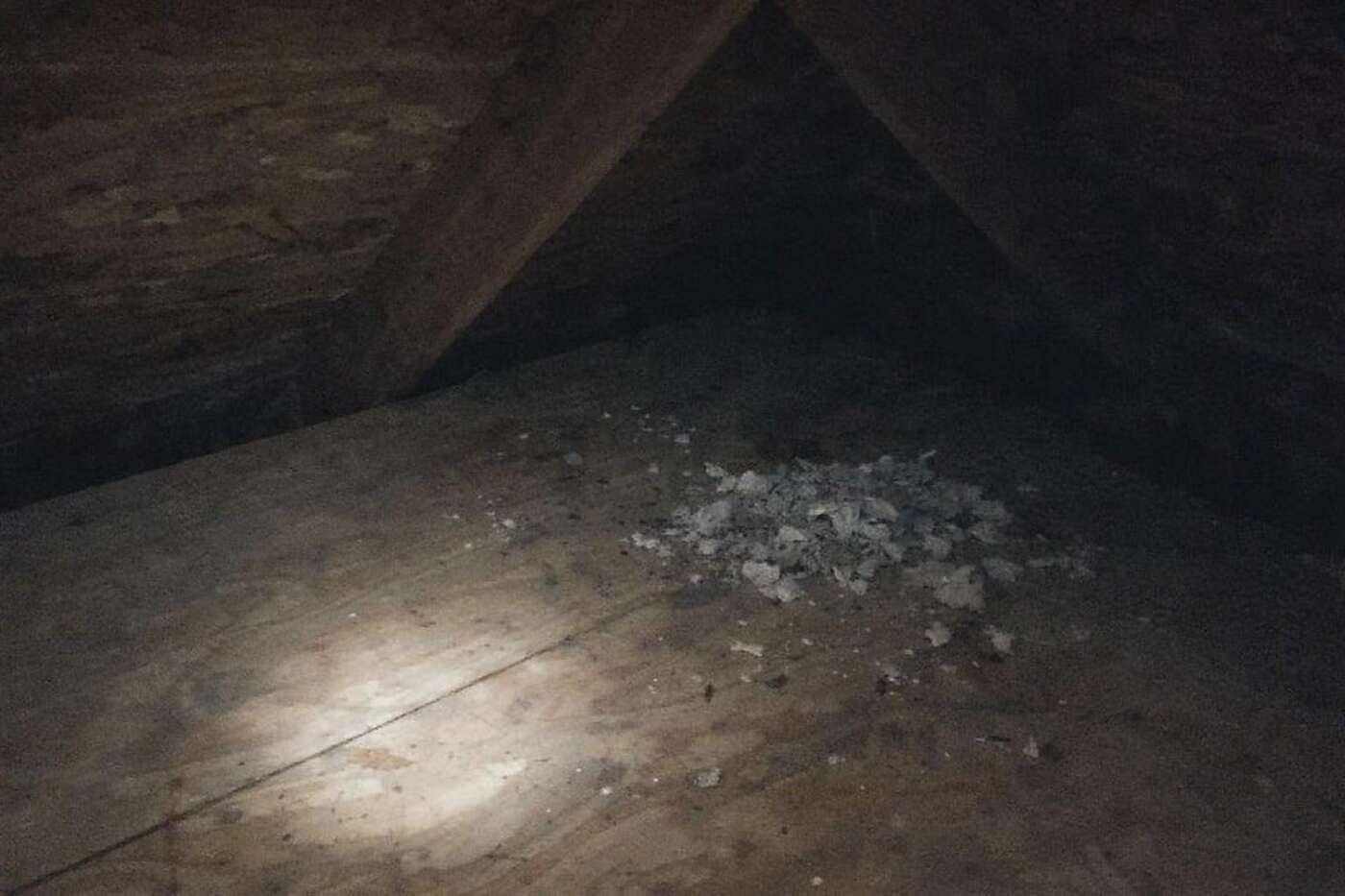
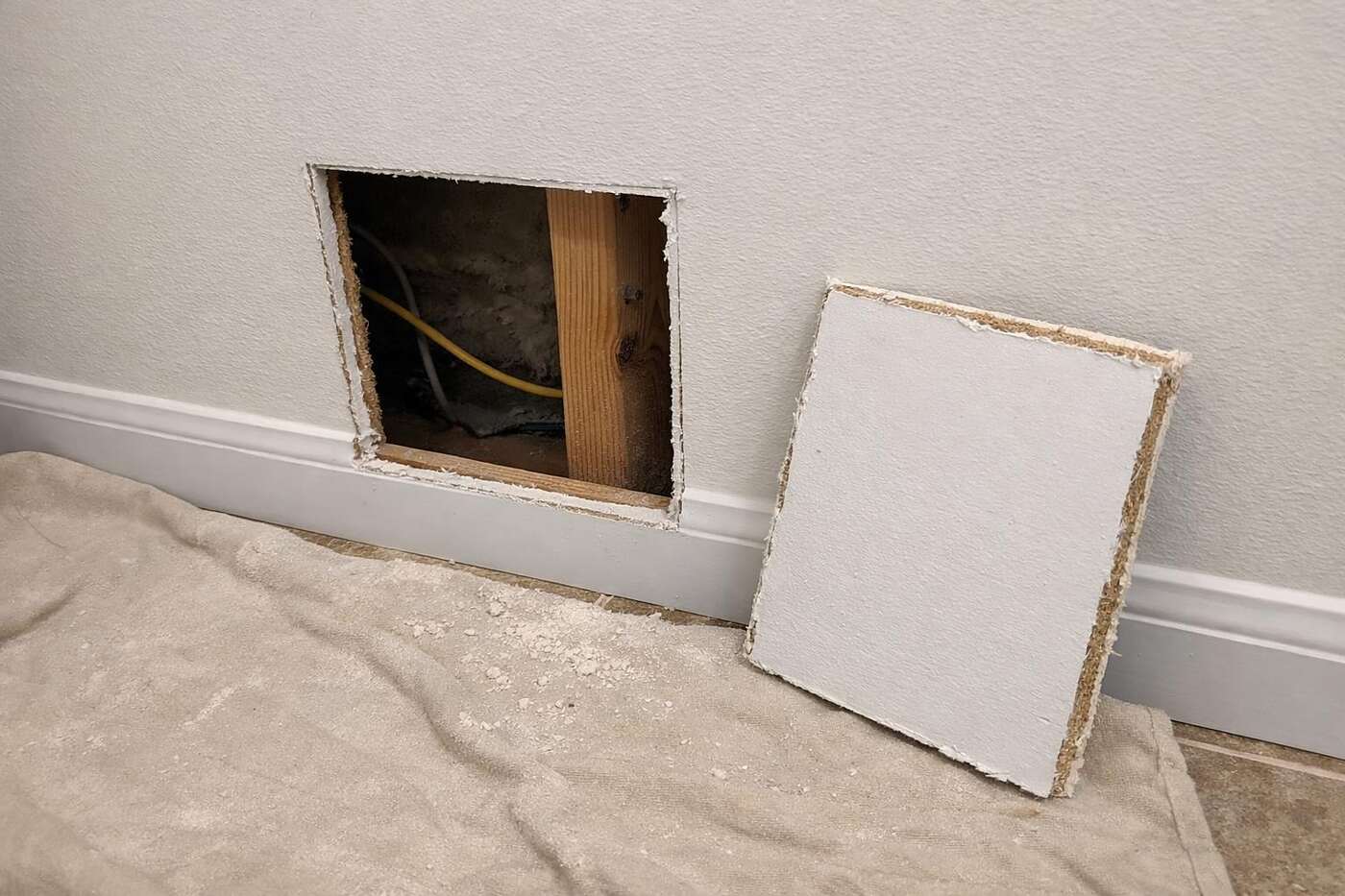
Finding it is the part that takes skill. A roof rat that dies in a joist bay over a hallway, inside a block wall furring channel, behind a kitchen soffit or on top of a duct boot gives away its position through smell intensity, fly activity and sometimes a stain on the ceiling paint. A contractor walks the attic first, because an attic carcass needs no cutting at all. Only when the smell is clearly below the ceiling plane does drywall come into it, and then the cut is a hand-sized access panel rather than a sheet.
Removal takes the animal, the nesting material around it and any insulation it has soaked. The cavity is then treated and deodorized, and the access is patched or left ready for a painter depending on what you want. The visit also closes the opening the animal used to get in, because a carcass means the building was open last month.
Signs that what you are smelling is a carcass
A dead rodent smells sweet and heavy rather than sharp, builds over three or four days, holds for a week or two, and then thins out. Urine in insulation smells of ammonia instead and returns every hot afternoon while the roof deck warms it.
- Flies appearing at one spot in a room, at the attic hatch, or at a ceiling light fitting, then disappearing and returning.
- A brown or yellow stain spreading on a ceiling or on a wall near the floor line.
- Beetles or maggots on a windowsill or a tile floor under the spot.
- The smell is strongest at one wall or one stretch of hallway, and it shifts as the air conditioning cycles.
- Scratching in the ceiling that stopped a few days before the smell started.
- A bait station or a rodenticide plan in use: the EPA notes that most rodenticides are anticoagulants and that death typically comes four days to two weeks after feeding begins, which is time enough for an animal to get deep into a structure.
People apologize for calling about a smell. It is one of the worst things a house can do to the people living in it, and it is a normal reason to call at nine at night.
How the carcass gets located before anything is opened
Location comes from the attic first, then from the pattern of the smell, then from a small inspection hole, in that order.
Most Palm Beach County houses are single story, slab built and block walled, with a vented attic above a flat ceiling. That geometry helps: a carcass above the ceiling drywall is reachable from the attic with no cutting, and the attic walk either finds it or rules it out within half an hour. Roof rats use the top plates as highways, so the usual resting places are along the wall lines and in the first joist bays in from the eave.
When the attic is clear, the animal is in a wall cavity, a plumbing chase, a kitchen soffit or a cabinet kick space. Furring strips on the inside of a block wall leave a narrow vertical channel, and an animal that falls down one cannot climb out. A contractor narrows the position by smell strength at the baseboard, by fly behavior, and sometimes with a borescope through a quarter-inch hole that takes a dab of filler afterwards. Cutting before the position is confirmed is how a homeowner ends up with four patches and the smell still there.
When the smell is in a condo
In a downtown tower or an older condo building the cavity often crosses into a neighboring unit or into a shared chase, and the access then needs the management company in the loop. That is a condo and HOA rodent control conversation as much as a removal, and it moves faster when the manager has a written request in hand on day one.
How long does a dead rat smell last if you do nothing?
A week to three weeks for most carcasses in this climate, with the worst two or three days in the middle, and a faint trace afterwards that can hang on for a month in humid weather.
Heat shortens it and intensifies it. An attic over a West Palm Beach house in July is hot enough that decomposition runs fast and the smell is brutal for several days, then drops away. The same animal inside an air conditioned wall cavity in February takes far longer and stays milder. Neither version is worth waiting out when it sits over a bedroom, and waiting has a second cost: the nesting material, the residue and the insects stay behind and keep the odor and the mite problem going after the animal itself is gone.
Ozone machines, bowls of vinegar and the sprays sold for this work on the air in the room. They do nothing about the source in the cavity. The smell comes back the hour the machine is switched off.
What dead rodent removal costs in West Palm Beach
HomeGuide 2026 puts dead animal removal at $150 to $500 nationally, and a straightforward attic carcass sits low in that band while a wall cavity with an access cut and a patch sits at the top.
| Line | Typical band | Source |
|---|---|---|
| Dead rodent removal and deodorizing | $150 to $500 | HomeGuide 2026, national |
| Drywall access and patch, where cutting is needed | quoted separately by the contractor | Varies with finish and paint |
| Trapping the rest of the group | $250 to $1,200 | HomeGuide 2026, national |
| Closing the entry that let it in | $500 to $2,500 for a full home | HomeGuide 2026, national |
What moves the figure: whether the attic reaches it, how much finish has to be opened and restored, how much soaked insulation comes out with the animal, and whether the same visit closes the roofline. A carcass on its own is the cheapest call in this trade and also the one most often sold as an emergency at a premium. Ask for the figure before the visit, and ask what the patch costs on its own.
Every band above is a typical-job range from a published guide. The free inspection is what turns it into a number for your house.
Why carcass calls cluster in Palm Beach County
Three local conditions put more dead animals inside walls here than the national picture suggests. Consumer rodenticide use runs heavy in a market where roof rats are in the roofline all year, and UF/IFAS makes the point that trapping reduces the risk of a poisoned rodent dying inside a building. Bait taken in an attic is digested somewhere in the house.
Second, the construction. Block walls with furring channels, kitchen soffits over cabinet runs, and barrel or flat tile roofs with long eave voids all give an animal somewhere to die that a homeowner cannot reach. There are no basements and almost no crawl spaces in South Florida, so everything happens in the ceiling plane and the wall cavity.
Third, heat and season. Summer drives rodents into cooled attics and garages between June and September, the same months the attic runs hottest, so the carcass calls and the worst decomposition conditions arrive together. The weeks after a storm add their own wave once wind has opened soffit and fascia lines; that situation is covered under post-storm rodent inspection.
What to check before you let anyone cut a wall
Confirm the license, the location method and the patch terms in that order, and settle all three before the saw comes out.
- Ask which FDACS credential the contractor holds. Trapping rats or mice in, on or under a structure for hire in Florida requires at minimum an FDACS Limited Wildlife Management Certificate, and every contractor we route holds the credential the job needs. Confirm the number through the FDACS lookup.
- Ask how the position will be confirmed before anything is opened, and whether the attic is being checked first.
- Ask who patches the access, whether paint is included, and what the patch costs.
- Ask whether the visit includes closing the entry point, and ask to see a photograph of it.
- Ask what is being used to treat the cavity, and be wary of a plan that is only a fogger.
- Ask whether a follow-up visit is included if the smell persists past a few days.
A carcass call is usually the first contact with the wider problem. One dead animal means a route, and a route means the roofline needs rodent exclusion and the remaining animals need trapping. The contact page has the hours, and the about page explains who attends.
Services that run alongside this one
A West Palm Beach rodent job is rarely one service on its own; these are the steps that usually sit before or after this one.
- Roof Rat Removal: Snap trapping along the runways of the palm rat that fills Palm Beach County attics, sequenced with sealing.
- Attic Cleanup and Decontamination: Droppings, nests and urine-soaked insulation bagged out of a baking attic, and the surfaces beneath them treated.
- Rodent Exclusion: Closing the tile eave with a metal bird stop, then every vent, soffit return and line-set sleeve, to the quarter-inch standard.
The about page explains how the line works and which credential to check, and the phone is answered at any hour.
Clearing the odor
A short explanation of the treatment.
Video: Get rid of that dead rat smell, from Bundilla Pest Control.
How a carcass call runs
Four steps, with the cutting deliberately last and smallest.
-
Free inspection of the smell
The attic is walked, the smell pattern is read at the baseboards and ceilings, and the likely cavity is narrowed down before any tool touches a finish.
-
Access at the smallest point
An attic carcass needs no cut at all. A wall cavity gets a hand-sized access panel or a borescope hole, placed where the patch is easiest to hide.
-
Removal and treatment
The animal, the nest and any soaked insulation come out in sealed bags, and the cavity is treated to break down the residue that carries the odor.
-
Close the entry, plan the rest
The opening the animal used is sealed or scheduled, and the trapping and sealing the building still needs is quoted as separate lines.
What to expect
The visit follows the same order whether the animal is in an attic or behind a kitchen soffit.
- The attic checked first, since that is the reach with no damage
- Protective kit worn for the removal and the insulation around it
- A small access panel rather than a removed sheet of drywall
- Sealed bags out of the house, and the cavity treated before it is closed
- A photograph of the entry point the animal used to get in
Why a carcass call goes through this line
The attic gets ruled out before a wall is opened
Most of these animals are above the ceiling drywall, where a contractor standing on the joists can reach them with nothing more than a bag. Walking the attic first is what separates a one-hour visit from a wall with four patches in it. Palm Beach County houses are almost all single story on slab with a vented attic, which makes that first check unusually productive.
UF/IFAS: roof rats travel and rest along top plates and rafters, the attic lines a contractor checks first
One dead animal is a finding about the building
A carcass proves the building was open recently and that something was living in it. The visit records the entry point and the active runs and quotes the trapping and the roofline work as separate lines, so you decide the order instead of buying a package. Nobody on this line is paid to leave the eave open for next season.
EPA: most rodenticides are anticoagulants and death typically follows four days to two weeks after feeding begins
The patch is priced before the cut
A drywall access panel in a painted hallway is a visible thing in your home, so its size, its placement and the cost of putting it right are agreed before the blade goes in. Where the geometry allows, the access goes inside a closet, above a cabinet line or on the garage side of the same cavity instead of the hallway.
HomeGuide 2026: dead animal removal runs $150 to $500 nationally, with finish repair quoted apart
What Reddit Says About Dead Rat Smell in West Palm Beach
The carcass threads are the most desperate writing in the whole rodent corpus. People describe not being able to use a bedroom, putting children in a hotel, and gagging in their own hallway. The replies are sympathetic and practical, and the first thing they all say is that the source has to come out because nothing sprayed into the air will end it.
The second thing they say is that the poison caused it. Thread after thread follows the same shape: bait went down, the scratching stopped, and four or five days later the smell started in a wall. The regulars in those threads push hard for trapping for exactly this reason, and they are blunt about companies that lead with bait stations.
The red flags they list: an emergency premium charged for a next-day visit on a smell; a company that wants to open drywall before looking in the attic; a quote that covers removal with no mention of the entry point; and an ozone or fogging plan sold as the whole answer.
The questions they tell each other to ask are simple. Will you look in the attic first? How do you find it before cutting? Who patches and paints? Is the entry hole being closed on this visit or quoted later? And one more that comes up after the smell goes: what about the mites, which is a nest cleanup question rather than a spraying question.
The free inspection here starts in the attic and prices the patch before anything is opened, which is the sequence those threads keep asking for.
A typical carcass call on a block house near Southern Boulevard
The situation: A 1960s block house west of downtown, single story, flat ceiling, furring channels behind the plaster. The owner put bait blocks in the garage after hearing scratching above the hallway, the noise stopped a few days later, and by the weekend the hallway smelled sweet and two dozen flies were at the ceiling light. The air conditioning pushed the smell into the back bedroom every time it cycled.
What gets done: The attic is walked first and the joist bays above the hallway are clear, which puts the animal below the ceiling plane. Smell strength at the baseboard and a borescope hole behind the bedroom door place it in a furring channel beside a plumbing stack, where it fell and could not climb out. A four-inch access panel is cut low on the closet side of the same wall, the animal and the nest residue come out in a sealed bag, the channel is treated, and the panel is patched. The soffit return the animal used at the carport end is photographed and mesh is fitted before the contractor leaves.
How it turns out: One visit of about two hours. The smell is lighter by that evening and gone in two days. Trapping for the rest of the group and a full eave closure are quoted as separate lines, and the bait blocks go in the bin.
Book the free inspection for this service
Describe what you hear and where, and a dispatcher lines up the nearest FDACS-licensed contractor. The phone is answered at every hour and the inspection carries no charge.
Dead rodent questions from West Palm Beach callers
The questions that come in at night, when the smell is worst and nothing feels like it can wait.
The smell and the search
Can you find a dead rat without cutting into my wall?
Often yes. The attic is checked first and a carcass above the ceiling drywall needs no cutting at all, which covers a large share of calls on single-story Palm Beach County houses. When the animal is below the ceiling plane, the position is narrowed by smell strength at the baseboard, by where flies are gathering and by a borescope through a quarter-inch hole, and the access panel is then cut at the easiest point to repair, often in a closet or a garage wall instead of a hallway.
Will an ozone machine or a deodorizer fix the smell?
It masks the air in the room while it runs and the smell returns once it stops, because the source is still in the cavity. Removing the animal and the material around it, then treating the surfaces it touched, is what ends it. Commercial odor products have a place after the source is gone, for residue in porous material, and no place at all as a substitute for removal.
Why did this happen right after I put poison down?
Because a poisoned animal keeps moving for days. The EPA notes that most rodenticides are anticoagulants and that death typically comes four days to two weeks after feeding begins, so an animal that ate bait in the garage can die deep inside a wall or over a bedroom. UF/IFAS makes the same point from the other side: trapping reduces the risk of a poisoned rodent dying inside the building. That is the main argument for trapping in an occupied house.
Afterwards
Do I need the attic cleaned after a carcass is removed?
Sometimes. If the animal died on bare decking and the spot is small, the removal and a treatment of that area is the whole job. If insulation is soaked, if there is a nest, or if the group has been in the attic for weeks, a full attic cleanup is the separate line that handles it. The inspection photographs the extent so you are deciding from pictures instead of from a sales pitch.
We are getting bites after the smell went. What is that?
Rodent mites leaving an abandoned nest are the usual explanation, and they are one of the reasons nesting material is taken out instead of left in place. Removing the nests and treating the area handles it. A spray-only plan that leaves the nest in the cavity is what the complaints online describe. If bites continue, a physician is the right call and the nest removal still needs to happen.
Still have a question? Call (561) 589-3578 and ask.

Book a free inspection for the smell today
The attic check costs nothing and rules out a cut in most houses. The phone is answered at any hour.