
Rodent Removal in El Cid
El Cid is a 1920s waterfront historic district of tile roofs, deep canopy and wood detail, which is close to ideal housing for a roof rat. The inspection starts where the branches meet the roof.
Why roof rats do so well in El Cid
El Cid gives a climbing rodent everything it needs in one block: a mature tree canopy that touches roofs, tile and wood rooflines built before anyone thought about quarter-inch gaps, and fruit in the yards for most of the year.
The neighborhood is one of the city's historic districts, built largely in the 1920s boom in Mediterranean Revival and Mission styles on the ridge beside the Lake Worth Lagoon. About eight percent of the city's houses predate 1940 and a large share of them are here and in the three neighboring historic districts. What that means on a ladder is wood soffits and fascia with joints that have moved, original gable and roof vents with corroded screening, barrel tile laid over board decking with open ends at the eave, and in a few houses a crawl space rather than a slab.
Then there is the canopy. Banyans, ficus hedging grown into walls, live oaks and royal palms run right over the rooflines on most El Cid streets. UF/IFAS describes the roof rat as arboreal, traveling along branches, wires and palm trunks, and able to range about 150 yards from its den. On a street like this that range covers a dozen houses, and a branch resting on a tile hip is a bridge that no amount of sealing at ground level affects.
What the inspection usually finds on an El Cid house
The findings fall into three groups: the way in at the roof, the route to the roof through the trees, and the food that keeps the population up.
- Open ends in the first course of barrel tile at the eave, with no bird stop fitted, which is a half-round opening along the whole edge of the roof.
- Wood soffit boards sprung at a joint or at a corner return, often where a gutter has been replaced.
- Original louvered gable vents with screening that has rusted through at the bottom corner.
- Gaps where a later addition meets the original roofline, which on a 1920s house is rarely a clean junction.
- Branches and ficus hedge growth resting on the roof or within a foot of it.
- Mango, avocado or citrus fruit dropping in the yard, and in this neighborhood the trees are old and productive.
Inside, the attic in an El Cid house is often a tight space under a framed hip roof with little or no insulation, which makes the runs along the top plates easy to read and the droppings easy to find. UF/IFAS describes roof rat droppings as a quarter to half an inch long, banana shaped with pointed ends, and that identification decides whether the work goes up to the roofline or down to the slab line.
Sealing a historic house without changing how it looks
Exclusion on a historic El Cid house is done with materials that sit inside the existing detail, so the work is invisible from the sidewalk.
The parts that do the sealing are galvanized or aluminum bird stop at the tile eave, stainless or galvanized mesh behind a vent louver rather than over it, steel wool and hardware cloth packed into a soffit gap, and sheet metal let in behind a fascia joint. All of it can be painted or finished to match. None of it changes a profile or a sightline, which matters in a district where exterior changes get attention.
What does get noticed, and what homeowners here regret, is expanding foam. It shows as a cream-colored line along a historic eave, it fails as a barrier because rodents chew through it, and in a tile roof it can block the ventilation path under the tile. Department of Energy guidance puts bird stopping among the measures recommended for a tile roof, which is the correct part for the job and also the one a review body recognizes.
The tree work is the other half and it is usually the cheaper half. Cutting branches back from the roofline, thinning a ficus hedge away from the wall, and clearing palm boot material removes the route. A sealed house under a branch that touches it still gets tested every night.
How a job runs on an El Cid street
The order is fixed: inspect, seal the quiet openings, trap the active runs, close the last of them, then deal with whatever is left in the attic.
On these houses the inspection takes longer than it does in the suburbs because there are more details to read and the additions rarely line up. The trapping runs at least a week; UF/IFAS advises leaving traps in place that long because roof rats are wary of new objects, and on a street with this much canopy there is usually more than one animal. The sealing work uses metal and mesh, fitted inside the existing detail, and the contractor photographs each closure so you can see what was done at the back of the house and up at the hip.
Where a 1920s attic has been used for a while, there is usually a cleanup line too: nests in the corners, droppings along the decking, and any old batt insulation that has been soaked. The trapping and sealing get done first, since cleaning an attic that is still open is money spent twice.
For this neighborhood the usual order is a free inspection, then roof rat removal on the active runs, then rodent exclusion at the eave and the vents, with attic cleanup where a nest has been in place for a while. The contact page has the hours and the office address.

The order an attic job runs in
Five stages, from inspection through to cleanup.
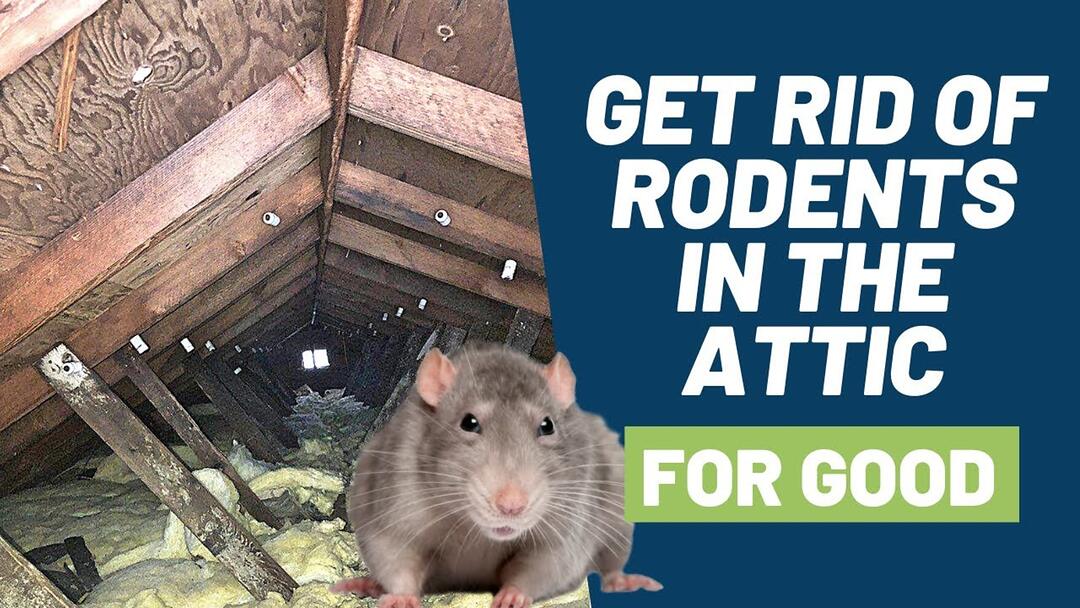
Video: 5 Step Solution to Get Rid of Rodents in Your Attic, from Atticare Construction.
Why El Cid owners use this line
The canopy gets mapped as carefully as the roof
Half the work on an El Cid house is off the building: which branch touches which hip, where the ficus hedge has grown into the wall, which palm trunk reaches the eave. A sealed roof under a resting branch is tested every single night, so the inspection records the routes and the trimming list alongside the openings.
UF/IFAS: roof rats are arboreal, travel along branches, wires and palm trunks, and range about 150 yards from the den
Closures that a historic district will not object to
Bird stop in a matching finish, mesh fitted behind a vent louver instead of across the face of it, sheet metal let in behind a fascia joint. The house looks the same from the street and the openings are gone. Foam along a 1920s eave is visible, chewable and bad for the roof assembly.
Department of Energy guidance puts bird stopping among the measures recommended for a tile roof
A 1920s attic is read from the evidence in it
Small framed attics with little insulation make the evidence unusually clear, so the runs, the nest sites and the entry points get identified from what is on the decking rather than from a standard checklist. That is the difference between sealing four openings and sealing the two that are being used plus the two that will be.
UF/IFAS: roof rat droppings are a quarter to half an inch long, banana shaped with pointed ends
A typical El Cid call
The situation: A 1925 Mediterranean Revival house on a brick street two blocks from the water, barrel tile over board decking, a later rear addition with a shallower roof, and a banyan on the swale whose limbs lie across the front hip. The owners hear movement above the upstairs hallway around dusk and have found a chewed mango seed on the back step twice.
What gets done: The inspection finds the eave course open its full length with no bird stop, a sprung soffit board where the addition meets the original roof, and a gable vent screen rusted through at one corner. The attic shows a run along the rear top plate and a nest of shredded paper and mango seed in the corner nearest the tree. The vent and the soffit are closed first with mesh and sheet metal, traps go on the rear run and stay nine days, and the bird stop is fitted along the eave once the catch stops. A trimming list goes to the owners for the banyan limbs and a ficus hedge at the side wall.
How it turns out: Three animals over nine days, then quiet. The closures are invisible from the street, the bird stop is finished to match the fascia, and the nest corner is cleaned and treated on a second short visit. The tree work is done by the owners' own landscaper the following month.
A free inspection on your street
The contractor covering this part of West Palm Beach walks the eave course, the attic and the yard trees, then writes an itemized quote. Nothing is owed for the visit.
El Cid questions
What callers from this part of the city ask first.
The house
Will sealing my 1920s roofline change how the house looks?
Done properly, no. The bird stop at the tile eave is a manufactured metal part that can be finished to match the fascia, vent screening goes behind the louver instead of across it, and soffit gaps are packed with steel and covered with let-in metal. Nothing changes a profile or a sightline. The work that does get noticed in a historic district is foam along an eave, which is also the material rodents chew straight through.
My house has a crawl space, which I thought was rare here. Does that change anything?
It adds a second front. Almost all Palm Beach County housing is slab on grade, so national guides that talk about crawl space exclusion usually do not apply, but a few of the oldest houses in the historic districts do have one. Where there is a crawl space, the vents, the access hatch and the plumbing penetrations get checked and screened with hardware cloth, and the inspection looks for Norway rat burrowing at ground level alongside the roof rat work above.
The trees and the timeline
Do I have to cut my banyan back?
You do not have to, and the work is less effective if you do not. A limb resting on a roof is a road onto it, and a roof rat that ranges the length of a street will keep using it. Most owners here take the middle path: clear the limbs that touch or hang within a couple of feet of the roof, thin the hedge off the wall, and leave the tree otherwise alone. Mature tree work in this neighborhood may also need a city permit, so check before a crew starts.
How long will the whole job take on a house like mine?
Usually two or three visits over two to three weeks. Traps stay at least a week because roof rats avoid new objects, and on a canopied street there is often more than one animal, so nine or ten days of trapping is common. The sealing happens partly on day one, for the openings that are not in use, and the rest once the catch stops. HomeGuide puts trapping a few animals at two to three days and a severe infestation at one to two months, and an older house with multiple entry points tends to sit in the middle.
Still have a question? Call (561) 589-3578 and ask.

Book a free El Cid inspection
Someone picks up the phone whatever the hour. Describe the noise and which limbs reach the tile, and the contractor we route will list every opening and price the trapping, the sealing and any cleanup on separate lines.